
MathWorks Hosts EcoCAR
Recently, when I arrived at work, I found this parked on the lawn:
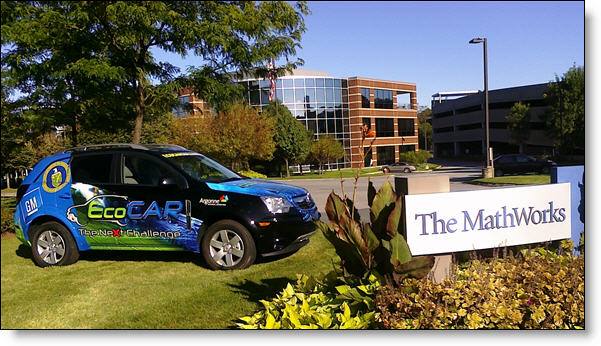
This is the EcoCAR from the EcoCAR Challenge. MathWorks hosted about one hundred students from the EcoCAR teams for the EcoCAR Year 2 Fall Workshop.
A Big Shiny Embedded Target
When I first saw the EcoCAR sitting on the lawn, I wondered what system target file they might use:
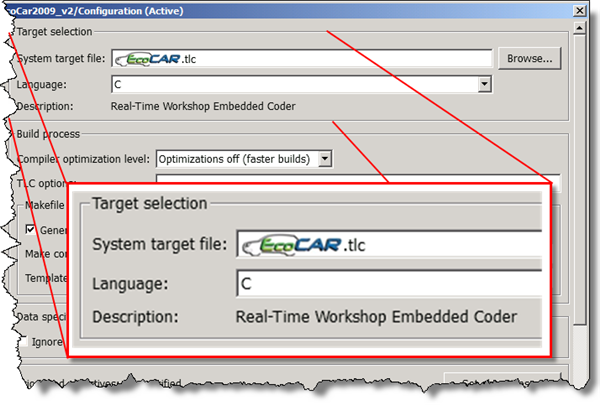
I’m sure there are a lot of cool things these students will be able to do with a great piece of hardware like this, but in many ways, it’s just a big, shinny embedded target.
What is EcoCAR?
EcoCAR is an academic competition. A quote from ecocarchallenge.org sums it up:
“The competition challenges 17 universities across North
America to reduce the environmental impact of vehicles by minimizing the
vehicle’s fuel consumption and reducing its emissions while retaining the
vehicle’s performance, safety and consumer appeal. Students use a real-world
engineering process to design and integrate their advanced technology solutions
into a 2009 Saturn Vue.”
The students had 5 days of training in different tracks to learn and apply MathWorks tools to the design problems facing them. If you read the Green Car Garage blog, you may have read about the event and the fun teams had during their visit to Boston. Nicole Lambiase from Argon National Lab wrote a post commenting that it really takes a village to make these competition events run smoothly. Some of the people in that village are members of the Model-Based Design community. A lot of my colleagues volunteer with EcoCAR Challenge. Many of them traveled from our Michigan office to lead trainings and mentor students that attended.
The Trouble with Model-Based Design
The trouble with Model-Based Design is that there are very few people and institutions available to help you learn it. I never had a class on Model-Based Design when I went to school. The EcoCAR Challenge is an opportunity to develop the next generation of engineers skilled in Model-Based Design. MathWorks is very committed to mentoring these future engineers. This aligns with our academic mission to accelerate the pace of learning, discovery, and research in engineering and science.
How about you?
How did you learn about modeling and Model-Based Design? Who was your mentor? Leave a comment here and share your story.
- Category:
- Community,
- Fun,
- Model-Based Design





Comments
To leave a comment, please click here to sign in to your MathWorks Account or create a new one.