
Startup Spotlight: BQP Develops Integration with MATLAB to Solve Quantum Problems
Quantum computing is transitioning from scientific theory to practical engineering, shifting the priority from raw qubit counts to system stability. To navigate the current hurdles of error correction, the industry is converging on hybrid architectures that pair quantum processors with increasingly powerful classical High-Performance Computing (HPC) systems. This synergy allows organizations to leverage quantum capabilities for specific complex tasks while relying on the proven performance of classical supercomputers for the bulk of the workload.
Simultaneously, the path to commercial value is being accelerated by software, specifically through quantum-inspired algorithms. These solutions apply quantum principles to today’s advanced classical hardware, enabling businesses to solve complex optimization problems without waiting for fully scalable quantum machines. This approach allows enterprises to transition immediately from “quantum-aware” to “quantum-ready.”
Finding a Solution to the Quantum Problem
Problem: In compute-intensive industries like aerospace, energy, and semiconductors, simulation engineers and data scientists face a persistent bottleneck: complex simulations are slow, expensive, and often limited by outdated algorithms. Even with modern high-performance computing (HPC), running thousands of simulations for a single aircraft component can take months, stalling innovation and inflating costs.
Solution: Startup BQP has developed a software platform that leverages quantum-inspired algorithms to supercharge digital twin modeling and simulation. A substantial increase in computational efficiency enables users to conduct complex simulations and AI training with greater speed and fidelity. This allows for exploring larger design spaces, converging on optimal solutions faster, and using more sophisticated physical models that align closely with real-world outcomes. It reduces reliance on costly physical prototypes, uncovers edge cases, and accelerates time-to-market.
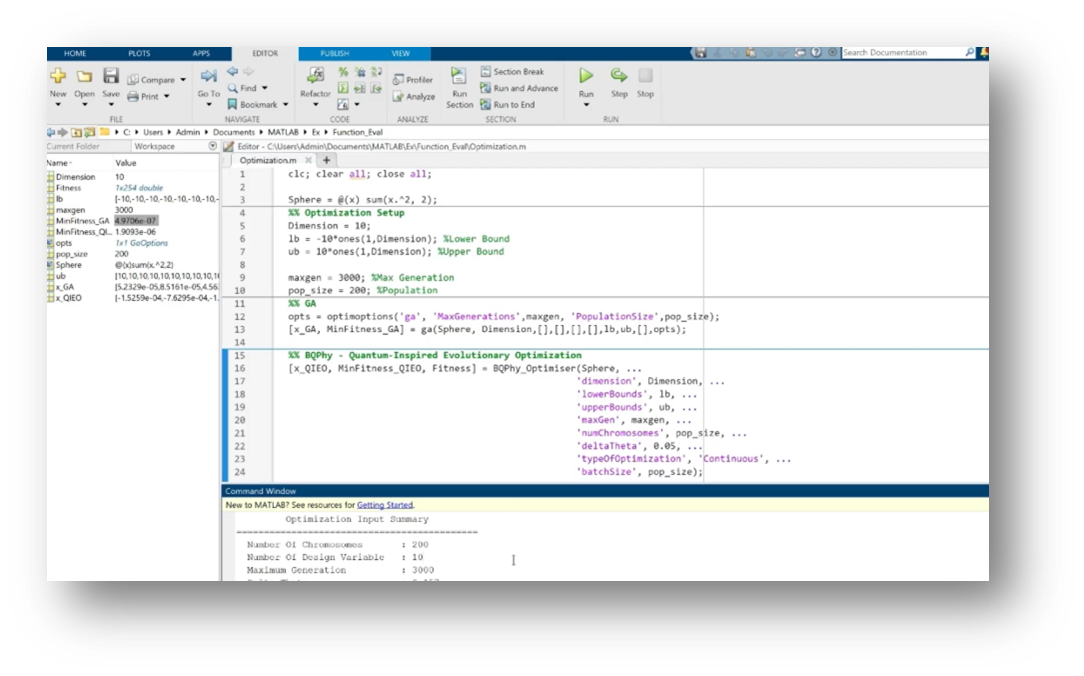
BQP’s QIO platform is easily called from within MATLAB (Image courtesy of BQP)
Inspired by Computational Barriers
BQP was founded by innovators who were all experiencing the same critical bottleneck of the “math lag.” “The math that goes behind these tools is outdated. They actually haven’t changed in the past 40 years,” Abhishek Chopra’s, Founder, CEO, and Chief Scientific Officer of BQP explains. While hardware capabilities have accelerated exponentially, the fundamental algorithms driving these simulations have remained stagnant for over forty years. Simply migrating legacy deterministic code to modern high-performance GPUs yields suboptimal results because the underlying logic is outdated. The industry has reached a performance plateau where faster machines can no longer compensate for inefficient, 1980s-era mathematics. This was Chopra’s “aha” moment.
A Platform for Modern Optimization
BQP’s product, BQPhy, is powered by a Quantum-inspired optimization (QIO) solver, designed to bring the benefits of quantum computing to classical hardware. Instead of relying on quantum computers, which are not yet commercially viable, the QIO solver uses quantum-inspired algorithms that mimic the mathematical principles behind quantum computing. These algorithms represent quantum circuits as tensors (multi-dimensional matrices) and execute tensor operations efficiently on traditional HPCs, CPUs, and GPUs.
The approach enables large-scale optimization without the cost or inaccessibility of quantum hardware. By leveraging advanced parallelization and concurrency, QIO scales across HPC environments, allowing simultaneous evaluation of multiple design points during optimization. This results in exploring challenging problems and areas that were prohibitive to the engineers. For example, it enables large-scale battery optimization for electric vehicles and streamlines aerospace scheduling tasks.
The team aims to solve the unsolved problems. “Legacy simulation algorithms are relics of the pre-smartphone era. Our team has rewritten the simulation algorithms from the ground up, to shatter yesterday’s limits,” shares Rut Lineswala, Founder and CTO of BQP. Engineers can achieve up to 10 times speedup on the same architecture for existing use cases, while maintaining compatibility for future integration with quantum hardware.
Integrating with MATLAB
The team chose MATLAB and Simulink to build their platform. Aditya Singh, Founding Member, VP Business & Strategic of BQP says, “Our goal is not to force engineers to learn a completely new, standalone platform. Our vision is to be a ‘backend engine’ that supercharges the tools they already use.” With MATLAB being an industry-standard tool for many engineers, BQP uses MATLAB to develop its technology as a seamless toolbox that plugs directly into the engineer’s existing environment. This integration dramatically lowers the barrier to adoption for their customers.
To provide solutions to engineers in industries such as aerospace and automotive, the BQP team sought access to the same tools they trust. “As a startup, resources are tight. MathWorks Startup Program gives us affordable access to the complete MATLAB and Simulink Suites,” Singh says. “This allows us to experiment, build, and test with the same powerful tools used by our enterprise-level customers without the enterprise-level cost.” For their development, they utilize MATLAB for rigorous testing and validation, ensuring their vision operates seamlessly for each customer.
“MathWorks Startup Program provides essential guidance and one-on-one support from MathWorks application engineers. This close collaboration was instrumental in our development; it’s precisely how our Quantum-Inspired Optimization Toolbox came into being. We were able to get expert advice to build our product in a way that is robust and native to the MathWorks environment.” – Abhishek Chopra, Cofounder, CEO, and Chief Scientific Officer, BQP
MATLAB enables the team to reduce R&D costs and increase productivity. “It is easy to compile source code into MEX format, enabling a common architecture and framework,” says Chopra. With ongoing solutions being added, the integration allows them to rapidly iterate and release new versions based on customer input.
Open Sharing with File Exchange
As Chopra agrees, a significant challenge for any startup is getting its product in front of the right users. For BQP, they wanted to leverage the global community of MathWorks users to amplify their flagship platform. They use MathWorks’ File Exchange to give a limited time of free access to the solver so users can experience QIO.
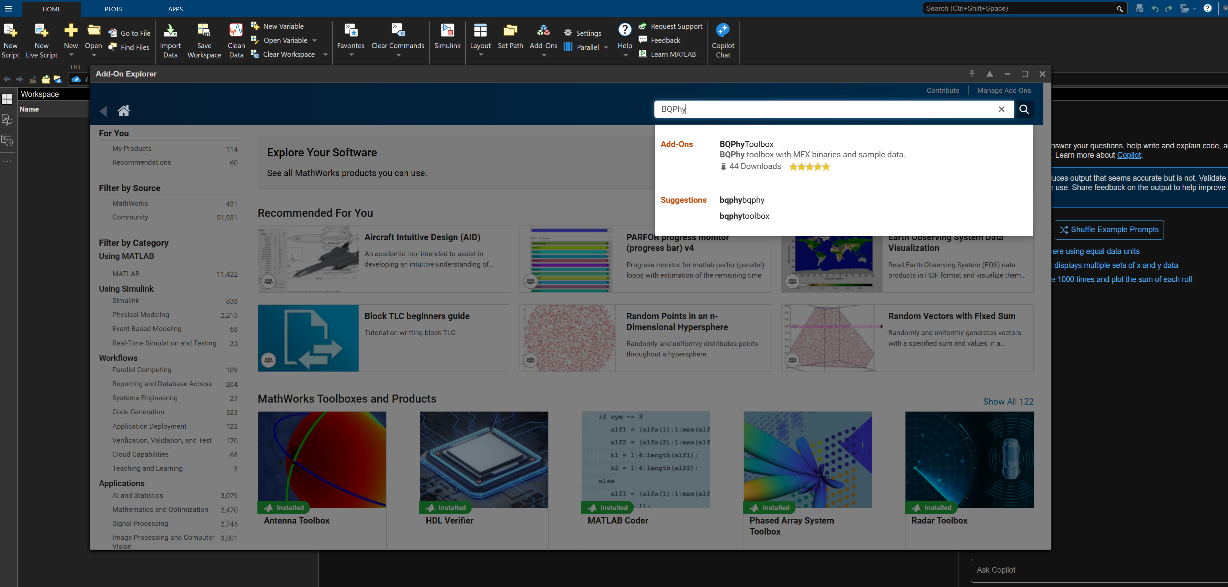
BQPhy toolbox is seen within MATLAB as an add-on toolbox.
MathWorks File Exchange allows the community to find and share custom applications, scripts, and more. Directly in MATLAB, a user can explore Add-Ons and find a toolbox or script to download that meets their needs. This allows users to leverage external tools while remaining within a coding environment that’s familiar to them. For startups like BQP, it’s a pathway to spread awareness of their platform. Not only does this attract prospective customers, but it also enables them to gather insights and feedback from users, helping to improve their product. BQP has found this to be a successful tactic for their go-to-market strategy.
Adopting a Value Mindset
Chopra explains how his mindshift in building a startup needed to change from his academic background. “In R&D or academia, the goal is often technical perfection or publishing a paper. In a startup, the goal is creating value that someone will pay for,” Chopra describes. “A ‘good enough’ solution that solves 80% of a customer’s problem today is infinitely more valuable than a ‘perfect’ solution that arrives two years too late.” The team moved their benchmark for success from technical elegance to customer traction and revenue.
However, this doesn’t mean the team is satisfied with the status quo. They are focused on continually improving the platform, starting with the addition of advanced physics AI and Multiphysics solvers to their platform. BQPhy’s near-term quantum-inspired solvers extract value for end-users today by utilizing the existing HPC, while also future-proofing with hybrid quantum-native solvers for datacenters where quantum computers will sit next to the HPC.
Preparing for the Quantum Future
The team is dedicated to building a future talent pipeline focused on quantum. Companies can struggle to establish quantum-focused innovation teams because it requires a rare, new blend of expertise in physics, computer science, and engineering. This gap creates a “quantum readiness debt,” leaving companies vulnerable to a steep, multi-year learning curve and competitive disadvantage.
BQP is participating in a pilot program in Upstate New York’s Quantum Valley, designed to expand awareness and fill the education gap. By providing quantum-inspired tools and real-world expertise to college students and local universities, BQP is giving the next generation of engineers and scientists practical, hands-on experience. This initiative creates a new, quantum-ready workforce, bypassing the long learning curve and ensuring a steady flow of talent that can be productive from day one.
All of this in mind, the team continues to fall in love with the problem that started it all. “Engineers and scientists often fall in love with their technology, be it AI, quantum, or a new algorithm. But successful startups are not built on a technology; they are built on a painful, expensive, and urgent problem that a customer has. Be obsessed with solving that customer’s problem. Your technology is just the tool you use to do it,” concludes Chopra.
Learn more about BQP: https://www.bqpsim.com/
Learn more about MathWorks Startup Program: https://www.mathworks.com/products/startups.html
Watch a live demo of BQPhy in MATLAB:


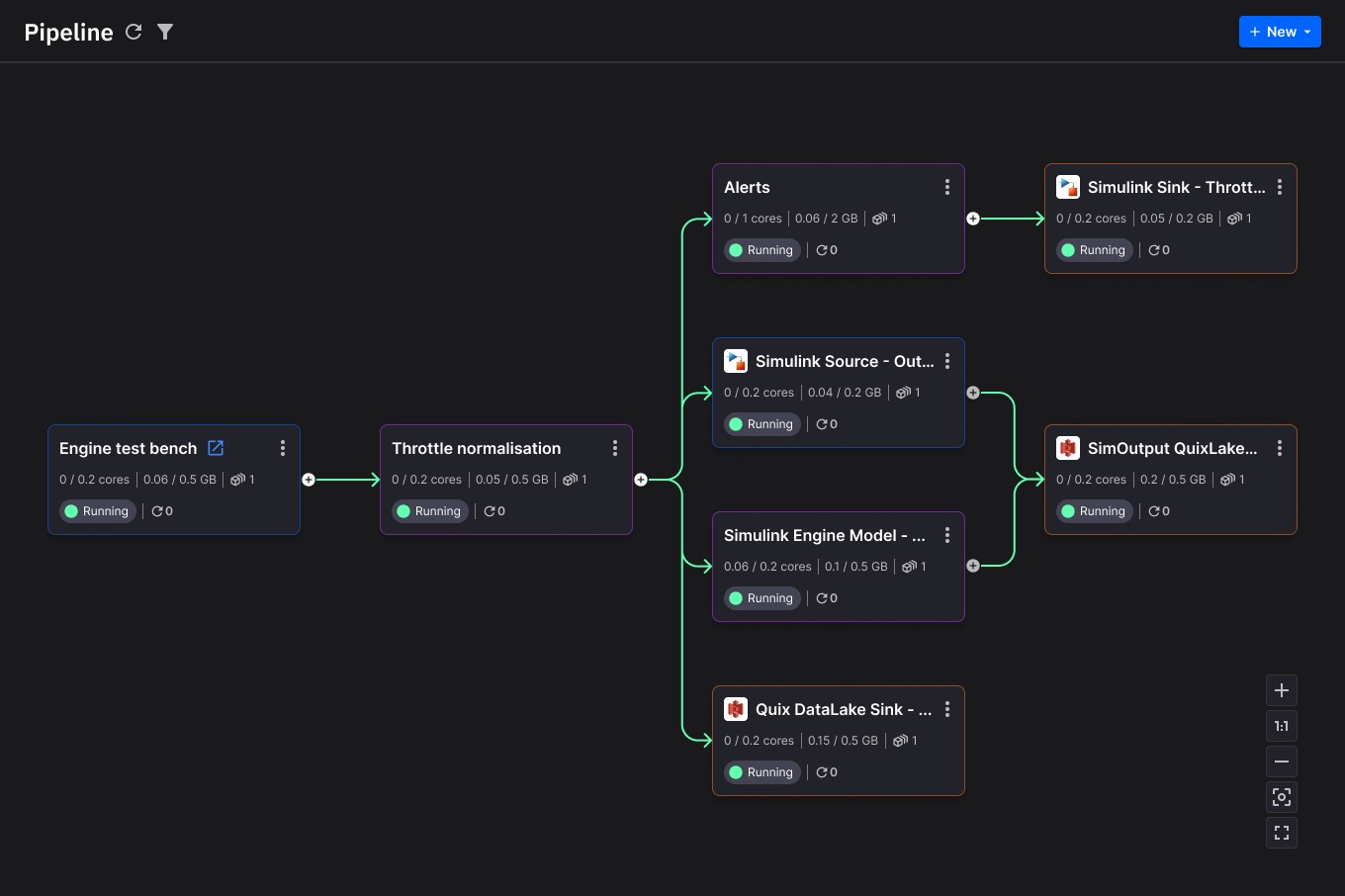
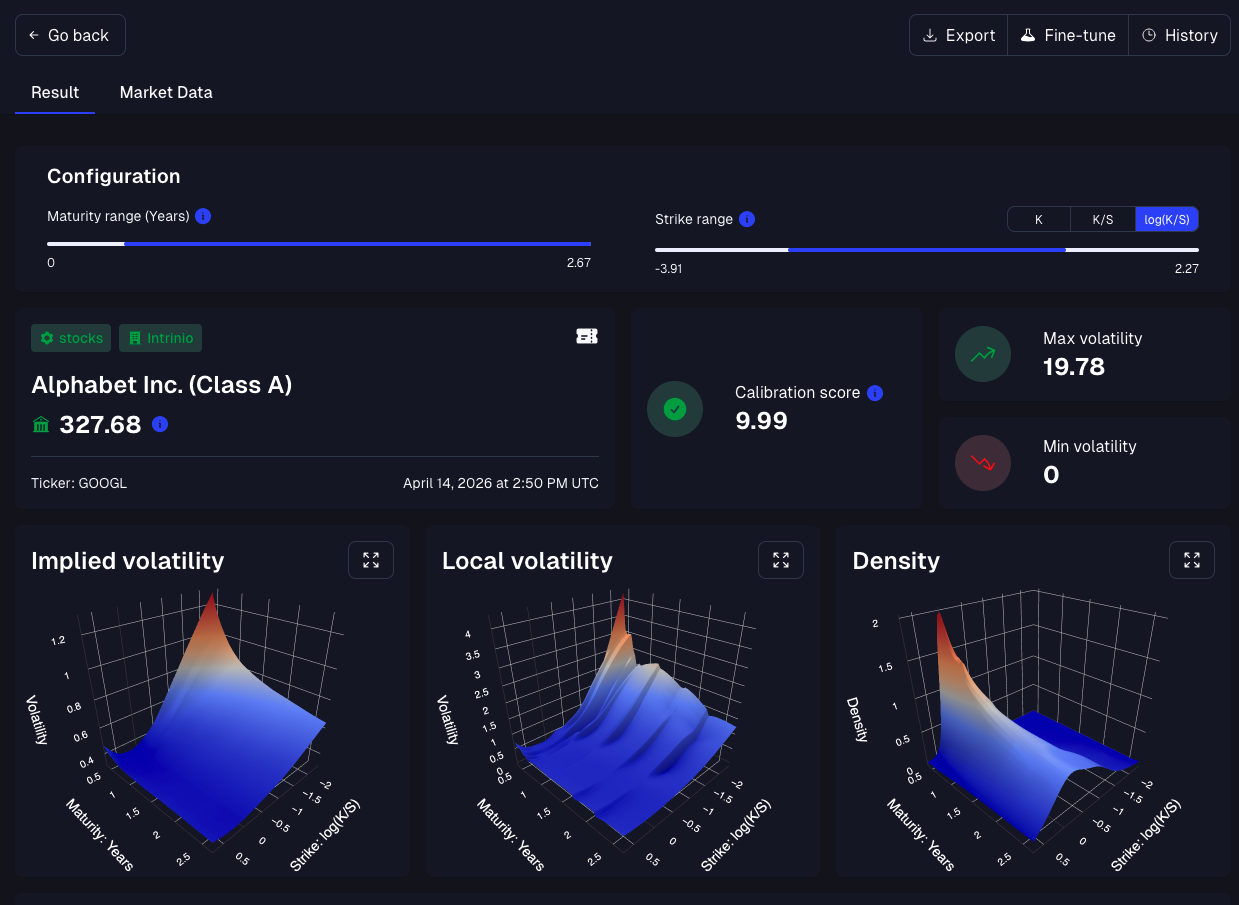


댓글
댓글을 남기려면 링크 를 클릭하여 MathWorks 계정에 로그인하거나 계정을 새로 만드십시오.