
What MATLAB EXPO 2026 Showed About Turning Models Into Decisions
The pendulum swung up, but it could not stay upright.
In a MATLAB EXPO demonstration, an AI agent helped develop a controller for an inverted pendulum. Simulation exposed the failure to stabilize, and the engineer asked the agent to investigate. The workflow continued through revisions and checks of generated code on the host computer and target hardware.
That sequence captured a theme across MATLAB EXPO Online 2026: models become useful when they help engineers evaluate a design and decide what to do next. Creating the model is one step. Understanding what its results mean, and when they need to be revisited, is just as consequential.
Three sessions brought that theme into focus, from AI-assisted development to battery thermal analysis and spacecraft operations. Together, they showed how checking behavior, understanding assumptions, and updating evidence support engineering decisions. The recordings below let you explore the workflows in more detail.
Check the behavior against the intent
The pendulum demonstration made the argument in our earlier post on evidence-based trust in AI agents concrete. An agent can create a plausible design, but the engineer still has to define success and assess the evidence.
Here, swinging the pendulum upright was only part of the objective. It also had to stay there. Connecting the controller to a plant model in Simulink made that distinction visible in simulation. Subsequent checks examined the generated implementation on the host computer and target processor.
The useful outcome was a workflow that exposed a failure and supported investigation. Engineers still need to judge whether the models and tests adequately represent the intended operating conditions.
Watch: How the engineer used simulation feedback to guide the next design step.
Building Embedded Controllers with Agentic AI and Model-Based Design
Know which question the model can answer
Simulation also raises a question about the model supplying the evidence: is it appropriate for this use?
Xiao Hu’s battery thermal modeling session offered a clear example. A reduced-order model simplifies a more detailed representation so engineers can evaluate selected behavior with less computation. In the work presented, the original thermal model assumed constant coolant flow. An analysis involving changing flow rates required extending the model to capture the associated heat-transfer behavior.
The extended method was compared with computational fluid dynamics reference cases for a battery module and pack. Those comparisons support its use under the conditions examined; they do not establish agreement with physical measurements across every operating condition.
This matters whenever a model moves from one task to another. A representation useful for an early concept study may need additional detail or checking before it supports a control or integration decision. Reuse calls for understanding its assumptions and the evidence behind them.
Watch: Why a change in coolant flow changes what the thermal model needs to represent.
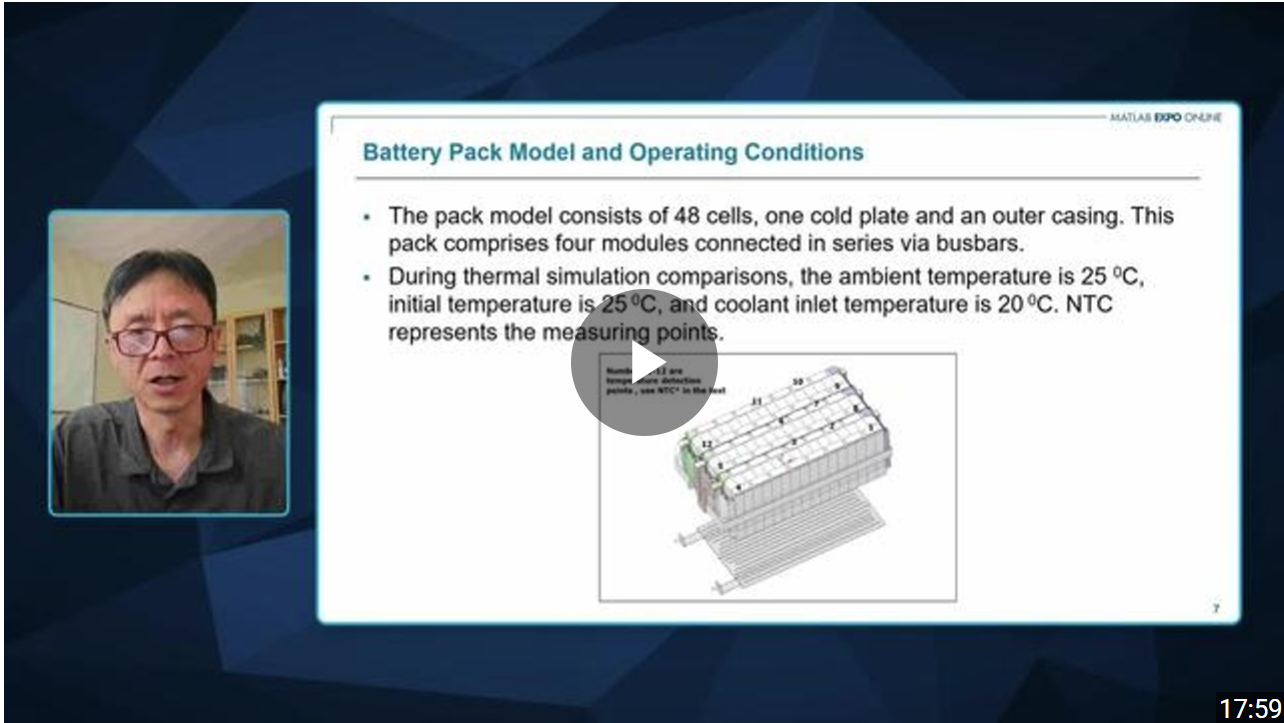
A Reduced-Order Model for Battery Thermal Management with Transient Flow Rates
Refresh the evidence when assumptions change
Lockheed Martin’s LINUSS mission presentation took that concern into spacecraft development and operations preparation.
The team described sensor timing and interface behavior that differed from earlier assumptions. It updated its real-time simulator using hardware data, added modeled behavior, and used the revised environment for software changes, regression testing, and operations rehearsals.
Updating the representation let the team examine the consequences of the new information and evaluate its response. The simulator supported both software development and the procedures operators would use during the mission.
That provided a practical example of the capability discussed in Beyond Links: connected engineering assets help teams evaluate behavioral impact and refresh evidence when something changes.
Watch: How revised hardware assumptions carried through to software tests and operations rehearsals.
How Simulators Saved a Space Mission: The Lockheed Martin LINUSS Story
Start with a decision your team relies on
Across these sessions, the engineering value came from making the basis for a decision visible and keeping it useful as the work changed.
Choose one result your team uses to accept or change a design. Identify the requirement it addresses, the model’s assumptions, and the inputs and configuration that produced it. Then consider what new information would require you to rerun the analysis or collect different evidence.
If an operating condition or design assumption changed tomorrow, could your team identify which results need to be revisited?
View the MATLAB EXPO Online proceedings page for more session recordings.


评论
要发表评论,请点击 此处 登录到您的 MathWorks 帐户或创建一个新帐户。