
How Clemson Students Built a 180 mph Driverless Racecar
This blog is in collaboration with University of Clemson’s Deep Orange student development team and New Eagle.
Graduate students in the Deep Orange program at Clemson University are not afraid to take on a challenge. As part of the Indy Autonomous Challenge, they worked on designing, building, and testing autonomous racecars alongside both faculty and industry partners. Deep Orange and projects like it are a proving ground to shape the next generation of engineers and developers. They rely on industry-grade tools, including New Eagle’s Raptor Academic Platform built on Simulink, to help students move from concept to high-performance systems.
From off-road navigation to high-speed autonomy on the track, let’s take a closer look at how Clemson students are applying these tools and pushing the boundaries of future engineering.
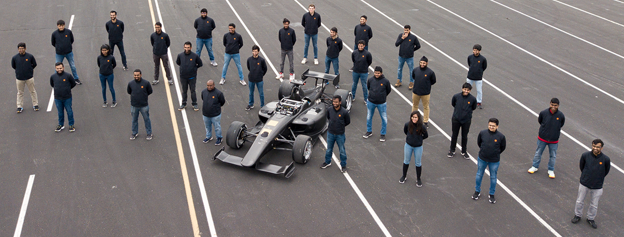
Figure 1: The Clemson team with the Deep Orange 12 vehicle at IAC
Source: Clemson University
Education and Real-World Innovation
At the Clemson University International Center for Automotive Research (CU-ICAR), selected graduate students in Clemson University’s Department of Automotive Engineering gain hands-on experience through the Deep Orange program, working much as though they were part of an OEM or Tier 1 supplier.
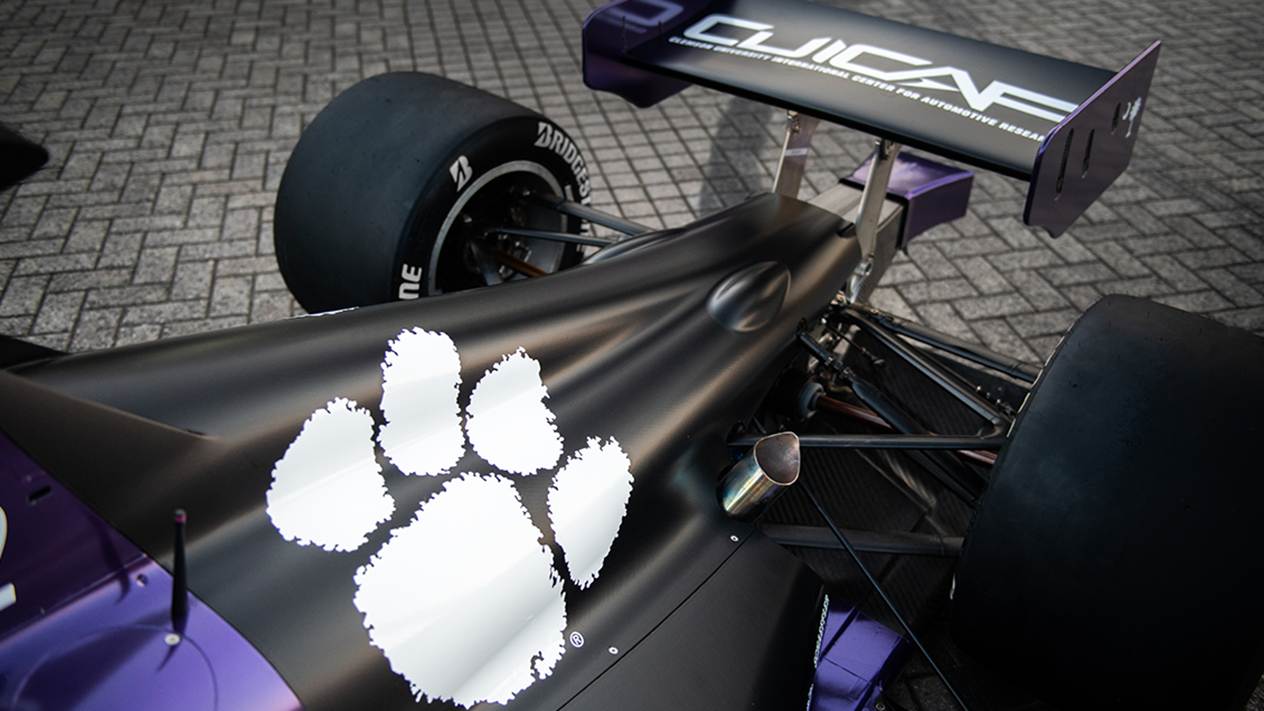
Figure 2: Source Clemson University
Alongside faculty and industry partners, they collaborate to design and build a new vehicle prototype each year. New Eagle Application Engineer Drew Barnett was once one of these students. Having participated in the Deep Orange 12 project, he has firsthand insight into how experiences like this prepare students for careers in engineering.
“Working on the Deep Orange project was one of the most valuable parts of my time at Clemson. I was involved in integrating autonomy systems, developing control and communication software, and helping lead a large team through tight timelines. That experience gave me a strong foundation for working on complex systems in an industry environment.” – Drew Barnett
Deep Orange 12–16 and Beyond: Tapping Into Raptor
Multiple Deep Orange projects have utilized the Raptor platform to build advanced vehicle control systems, starting with Deep Orange 12 (DO12) in 2021. Clemson partnered with the Indy Autonomous Challenge (IAC) to produce a driverless high-speed racecar which would compete against other university-based student teams.
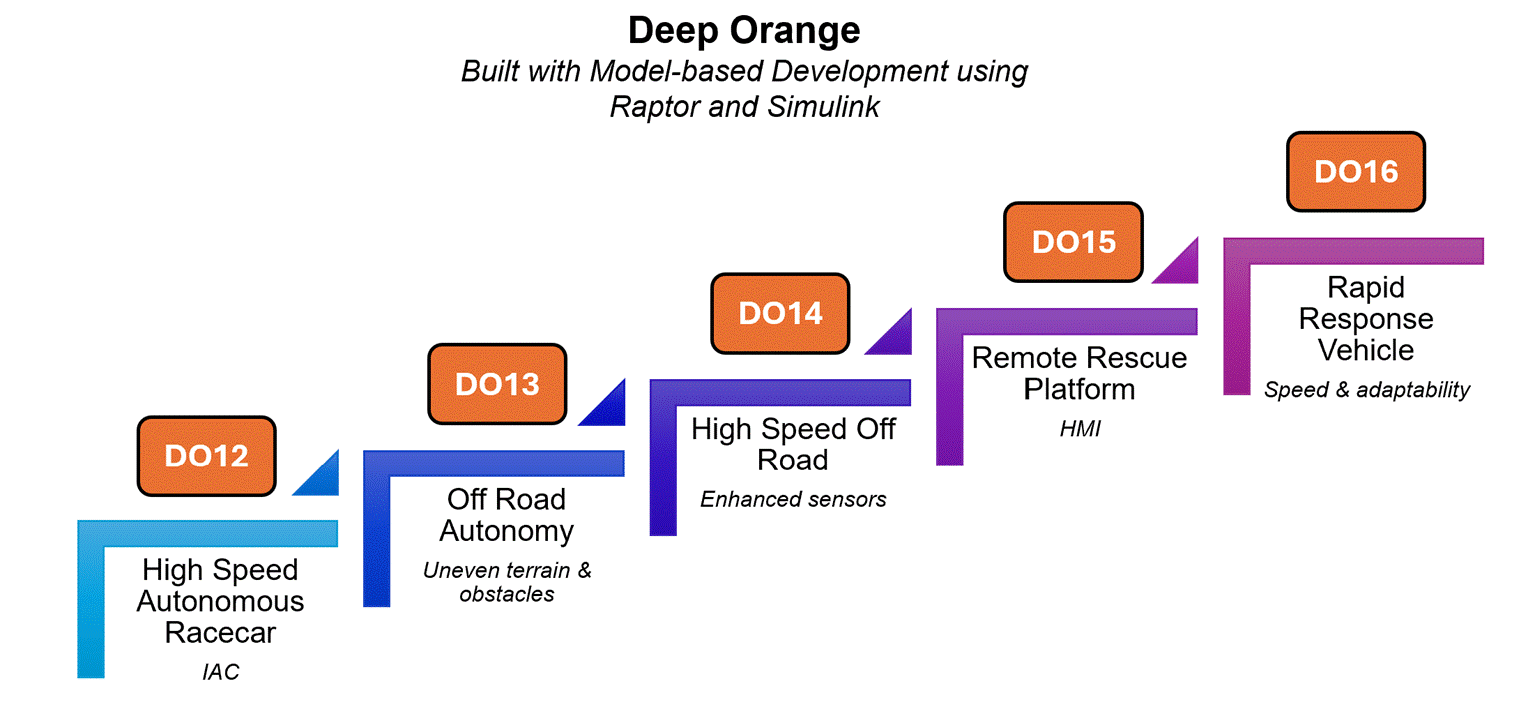
Figure 3: How Clemson expanded autonomous vehicle capability across projects
The goal of the IAC is not just to successfully create a working prototype but for students to develop innovative solutions for autonomous mobility. To accomplish this goal, students use model-based design with Raptor and Simulink to achieve autonomy, electrification, and innovation through model-based development.
As Kevin Alley, New Eagle’s Chief Commercial Officer, puts it, “If the racecar is the human body, then the Raptor controller is essentially the nervous system that connects and monitors all of the vehicle’s complex systems.”
Since the first IAC vehicle in 2021, tools like Raptor have helped students integrate complex autonomous control systems. The Raptor Academic Platform, which includes the complete suite of Raptor software development tools as well as several ready-made templates, helped teams get started quickly and focus on system design and integration.
Ultimately, these projects have demonstrated the value of academic–industry partnerships in pushing the boundaries of vehicle control and autonomy.
Deep Orange 13: Off-Road Autonomy
Deep Orange 13 shifted the focus from closed-track racing to off-road autonomy, introducing a new layer of environmental complexity. Students developed a prototype capable of navigating uneven terrain, unpredictable obstacles, and variable traction conditions.
Unlike controlled racetrack environments, off-road scenarios required more robust perception systems and adaptive control strategies. Teams integrated advanced sensing technologies and refined path-planning algorithms to ensure safe and efficient navigation.
The project emphasized durability, real-time decision-making, and system resilience, all key factors for autonomous vehicles operating in unstructured environments. DO13 expanded the program’s scope, pushing students to think beyond speed and toward versatility in autonomy.
Deep Orange 14: High-Speed Off-Road Autonomy
Building on DO13, Deep Orange 14 combined off-road capability with high-speed performance. The challenge was to maintain stability, perception accuracy, and control precision while operating at higher speeds across rugged terrain.
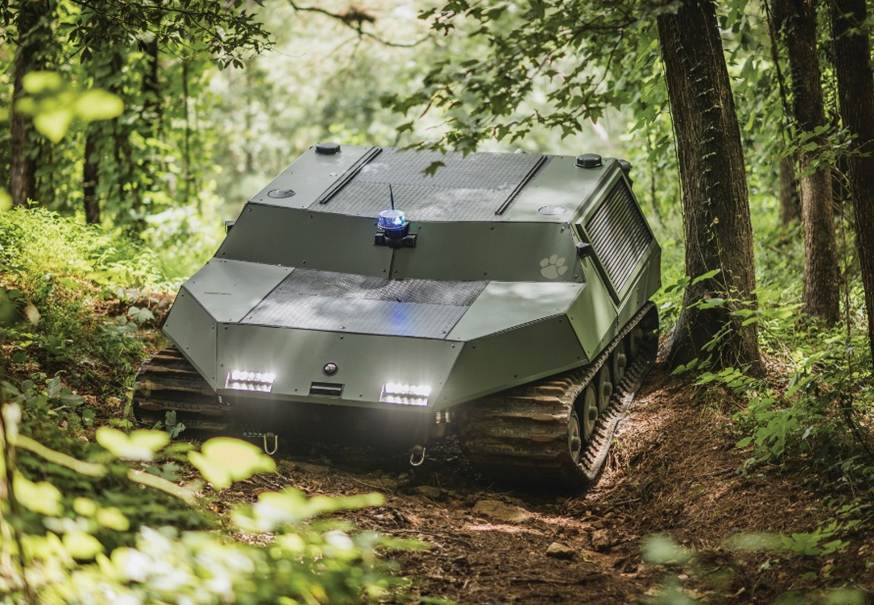
Figure 4: Deep Orange 14 Vehicle, Source: Clemson University
The cohort of students worked in partnership with the U.S. Army Ground Vehicle Systems Center (GVSC) over the course of three years to develop this vehicle from the ground up. They enhanced sensor fusion techniques and optimized control algorithms in order to handle rapid changes in terrain and vehicle dynamics. This required careful balance between speed and safety, with a strong emphasis on predictive modeling and system responsiveness.
DO14 ultimately demonstrated how autonomous systems can scale performance without sacrificing reliability. For applications such as defense or emergency response, this project offers valuable insight without putting humans in harm’s way.
Deep Orange 15: Remote Rescue
Deep Orange 15 explored autonomy in mission-critical scenarios, focusing on remote rescue applications. Students designed a vehicle capable of operating in hazardous or inaccessible environments, from urban rubble to desert sands, particularly in the aftermath of disaster events.
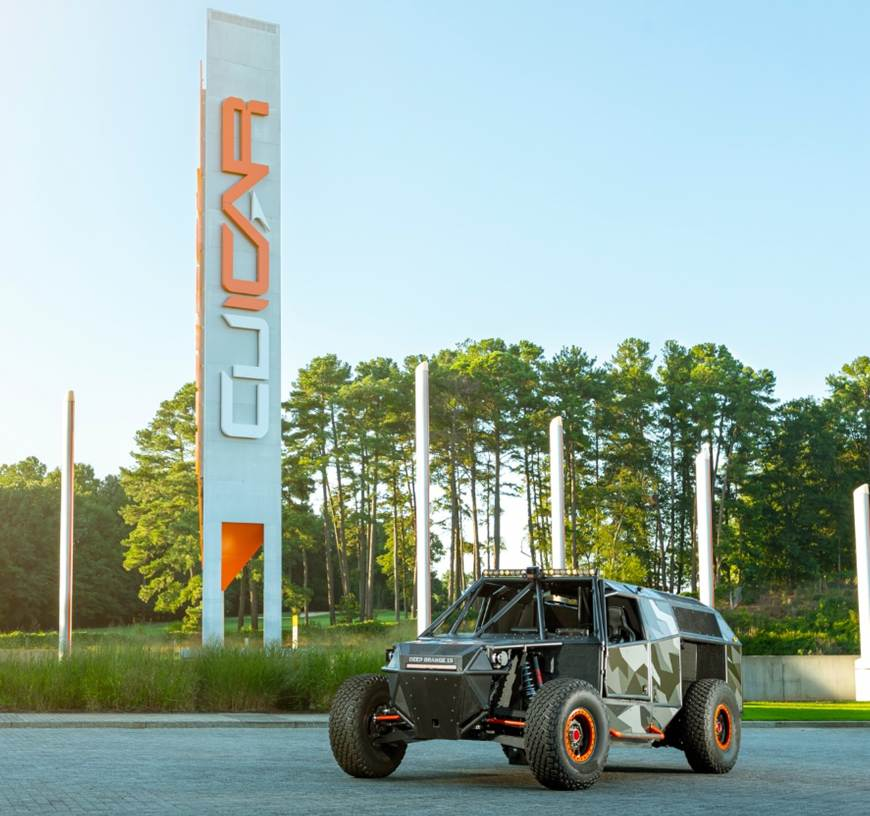
Figure 5: The Deep Orange 15 Vehicle, source: Clemson University
Teams worked to develop solutions for terrain mapping and obstacle avoidance, as well as autonomous navigation. In any scenario, reliable data transmission under challenging conditions was critical so that operators could monitor and guide the vehicle when necessary. Human–machine interactions played a key role.
DO15 highlighted the potential for autonomous systems to support emergency response efforts and improve safety in high-risk situations, as well as the tremendous value for research.
Deep Orange 16: Rapid Response
Deep Orange 16, unveiled at the 2025 Ground Vehicle Systems Engineering & Technology Symposium (GVSETS), advanced the concept of autonomy in time-sensitive operations, focusing on rapid response scenarios in dynamic environments. The vehicle needed to deploy quickly and navigate efficiently, so students worked on reducing response times and improving overall vehicle readiness in addition to optimizing system integration.
DO16 incorporated lessons from previous Deep Orange projects to combine high-speed capability, off-road performance, and advanced autonomy into a cohesive platform. It underscored the importance of scalability and adaptability, demonstrating how autonomous systems can be tailored for a wide range of real-world applications, from disaster response to logistics.
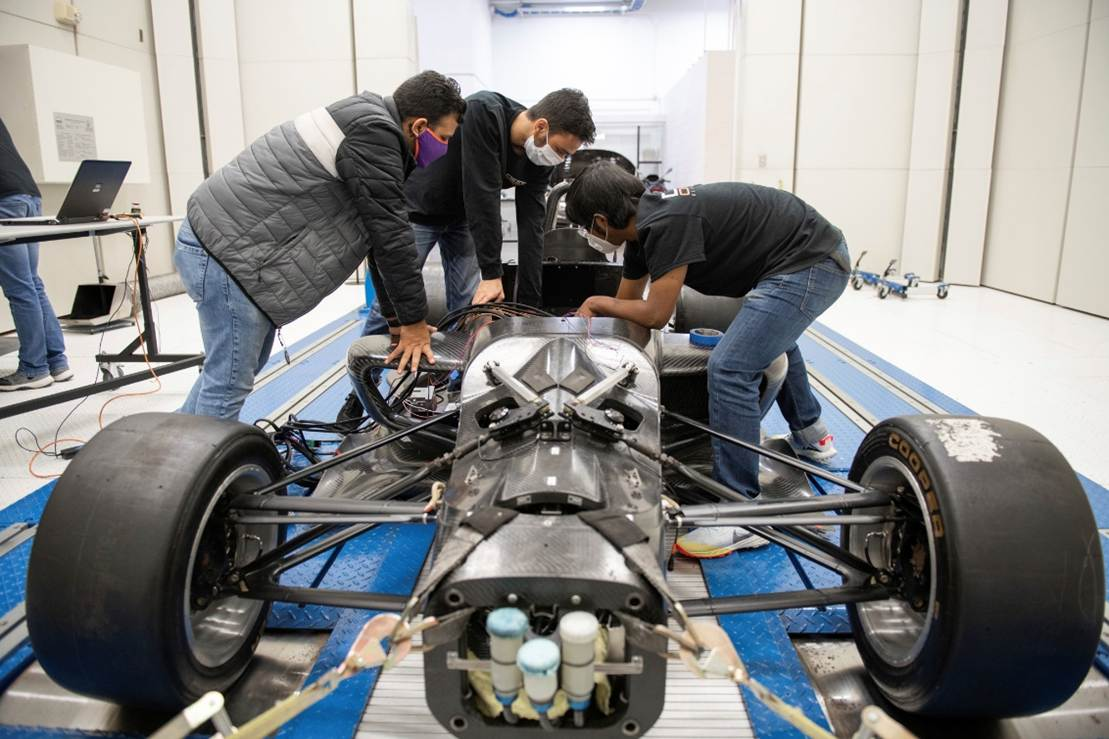
Figure 6: Students working on the DO12 Vehicle, source: Clemson University
Deep Orange 17 is in progress and we are looking forward to the results. But today we want to dig a little deeper into DO12 (the first to take advantage of the Raptor platform) and the specific challenges these students confronted.
Deep Orange 12 and the Indy Autonomous Challenge
For Deep Orange 12, Clemson University partnered with the IAC to build a race-ready autonomous prototype. More than 40 graduate students contributed to vehicle development.
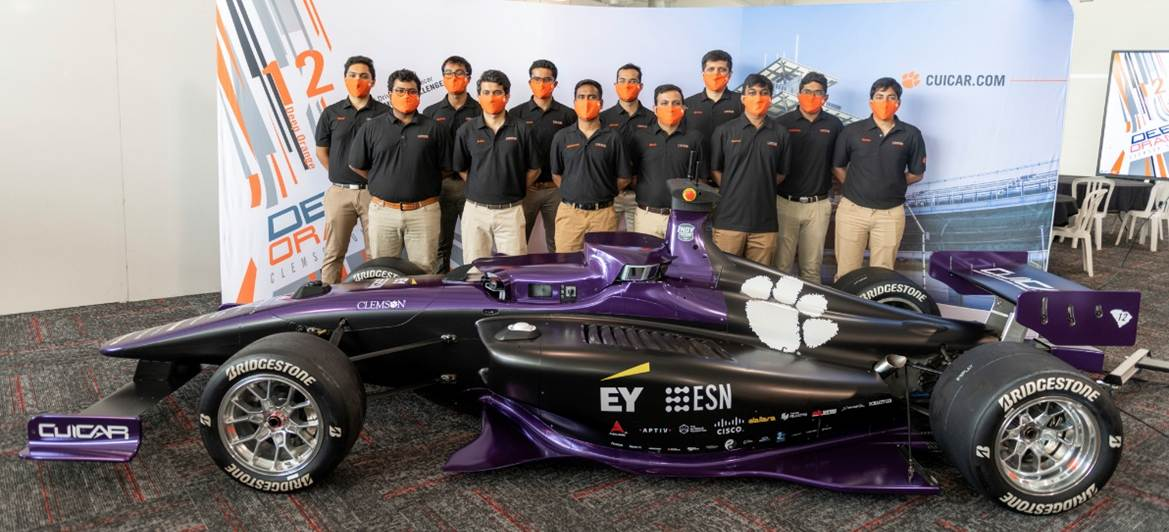
Figure 7: Source: Clemson University
- The Goal: Design and prototype the base vehicle that would be distributed to nine international university teams, all aiming to break speed records at the legendary Indianapolis Motor Speedway.
- The Task: Transform a modified Dallara IL-15 into a fully autonomous platform capable of safely navigating a high-speed racetrack—without a driver.
- The Challenge: The team had less than two years to complete the project, much of it during the height of the COVID-19 pandemic.
So, how did they do it?
From Problem to Results: How to Achieve Autonomy at 180 mph
- The Problem: The student team needed to replace human driver interactions with embedded systems capable of perceiving, analyzing, and reacting to real-time racing conditions—all at blistering speeds.
- Development: In January 2020, the project began. Students and faculty at Clemson started retrofitting the racecar with the sensors, ECUs, and software needed for autonomy. We all remember 2020. The pandemic quickly forced remote collaboration, delaying timelines by up to seven months. Yet despite this major setback, the team didn’t give up.
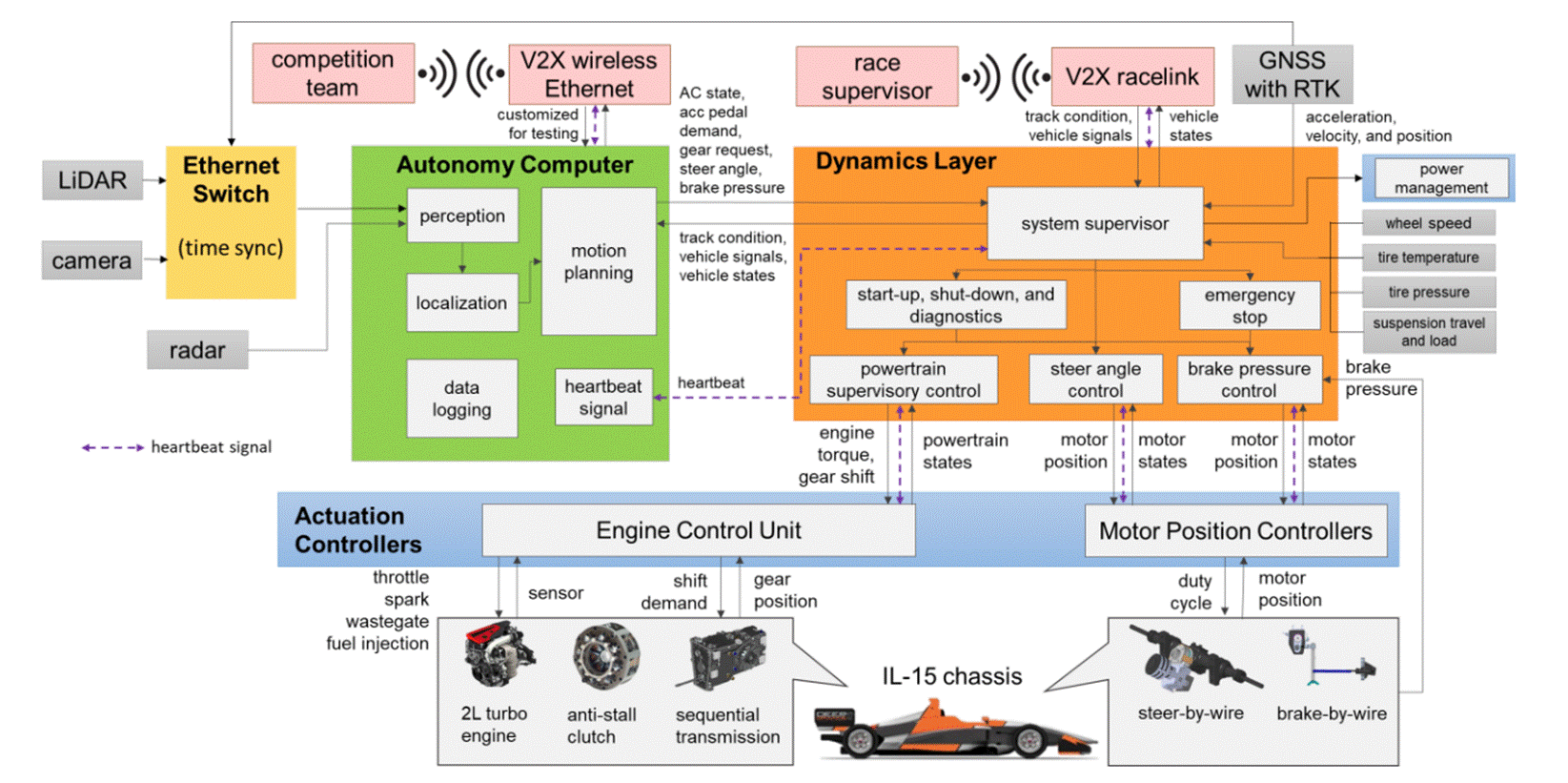
Figure 8: Control System architecture of the autonomy-enabled Deep Orange 12 prototype
This was a complex, multi-layered challenge. Every control system had to be redesigned for autonomous operation. From braking and steering to perception and decision-making, nearly every component required customization.
But the team delivered the prototype on time.
“What made this project especially challenging was the level of integration required across every system on the vehicle, all under a tight timeline and evolving conditions. Students had to work across disciplines, coordinate with partners, and continuously adapt their approach. That combination of technical depth and collaboration is really what made the team successful.” — Dr Rob Prucka, Department Chair, Department of Automotive Engineering, Clemson University
- Results: Working with partners across sensing, computation, and controls, students used industry-grade tools like Raptor and Simulink to turn their designs into working systems. Using this workflow together with New Eagle’s off-the-shelf ECUs, the team rapidly developed and tested supervisory vehicle controls within Simulink.
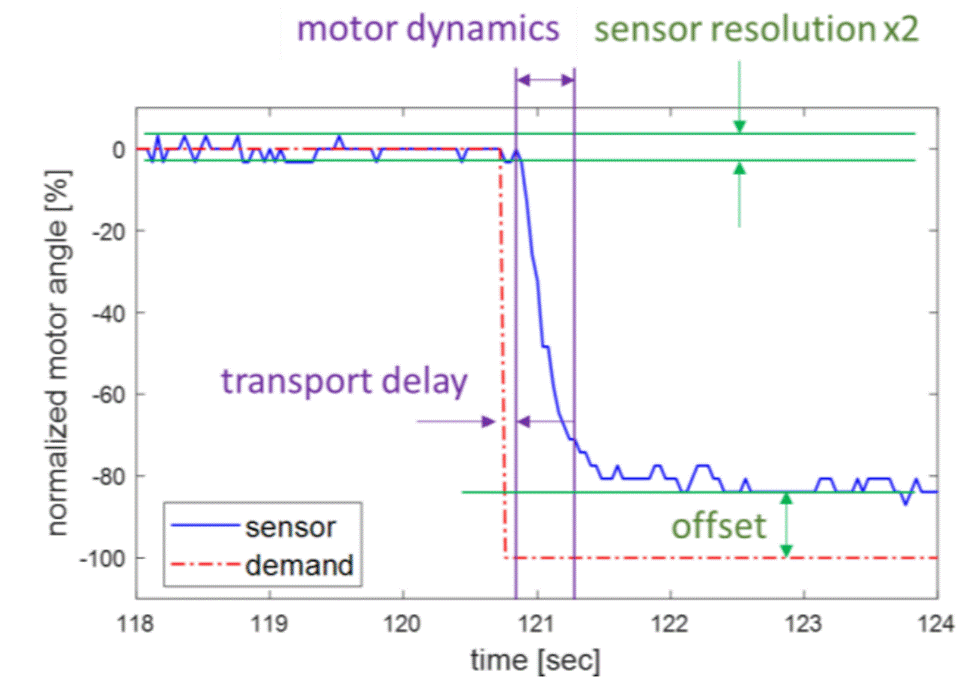
Figure 9: An example of steer-by-wire response tracking a step change of steering angle demand during a bench test
The toolchain enabled code generation and deployment directly onto the ECUs. This allowed the team to focus more on system integration and performance tuning instead of low-level implementation. Overall, the model-based workflow helped shorten development cycles and enabled faster iteration.
In addition to tools, industry partners contributed key hardware components and expertise. For example, centralized embedded controllers were used to interface with the vehicle’s chassis system and autonomous computer. Through this experience, students gained hands-on exposure to production-quality hardware and real-world development workflows.
Our Take on the Future of Engineering
Programs like Deep Orange show how industry and academia can work together to prepare the next generation of engineers. The Raptor Academic Platform, built on Simulink, helps to supplement the classroom with real-world engineering workflows, in which students engage with the same systems and challenges they’ll encounter in their careers.
Experiences like the Indy Autonomous Challenge give students the opportunity to apply what they’ve learned in the classroom to real-world engineering problems. By combining academic learning with industry tools and mentorship, programs like Deep Orange help bridge the gap between education and practice. For students interested in autonomy and advanced vehicle systems, projects like these offer a glimpse of what’s possible and a pathway to get there.
- カテゴリ:
- Automated driving,
- Automotive



コメント
コメントを残すには、ここ をクリックして MathWorks アカウントにサインインするか新しい MathWorks アカウントを作成します。