
Why Students Should Learn Model-Based Design: Insights from Industry Leaders at MATLAB EXPO
Introduction: Why These Skills Matter
Engineering today is a dynamic, fast-moving field. Whether you’re designing autonomous vehicles, aerospace systems, or renewable energy solutions, one truth remains: success depends on mastering both cutting-edge tools and foundational skills.
At MATLAB EXPO, Paul Shears, Chief Engineer at BAE Systems, talked with Ronald van Loon and shared insights that resonate deeply with students and early-career engineers. His message was clear:
- Model-Based Design (MBD) is transforming how complex systems are developed.
- Curiosity and hands-on learning are the keys to thriving in this evolving landscape.
After watching Paul’s interview we’ll explain why MBD matters, how you can start learning it today, and what core skills will set you apart in your engineering journey.

Why Model-Based Design Matters
Imagine you’re tasked with designing a flight control system for a fast jet aircraft; a system where safety is non-negotiable and precision is everything. Traditionally, such projects required 12 months and a team of 30 engineers. But at BAE Systems, using Model-Based Design (MBD) with tools like Simulink and Simscape, the same task was completed in under three months by just six engineers; and delivered with zero defects.
So, what makes MBD so powerful?
Instead of writing thousands of lines of code upfront, engineers create graphical models that represent system behavior. These models can be simulated early in the design process, allowing teams to verify performance before hardware is built. Once validated, the models can automatically generate production-quality code for embedded systems.
Paul explained how this approach transformed their workflow:
“We use a very multi-domain model based approach which covers the entire V life cycle of a product development life cycle. I think one of the examples where we’re quite proud is in the development of a full authority digital flight control computer. So we used great technologies from MathWorks like Simulink to design that software and then use that to autocode the software. Now as you can imagine that’s a very large complex piece of software. Very safety critical indeed. We’re able to autocode that. So shaving lots of time and money off the development cost and actually deliver it to the customer with uh with defects.”
Another example involved hydraulic actuator control systems for fast jets. Using Simulink and Simscape, the team modeled the physical system, tested control logic, and auto-generated code for FPGA hardware. When integrated into real hardware, it worked first time; a testament to the reliability of simulation-driven design.
Why It Matters for Students
- Industry Standard: Model-Based Design is widely adopted in aerospace, automotive, robotics, and beyond.
- Efficiency: It reduces development time and cost while improving reliability.
- Career Advantage: Employers value engineers who understand simulation-driven workflows and can bridge theory with practice.
Getting Started with Model-Based Design
You don’t need a defence lab to learn MBD. You can start right now with tools and resources available to students:
Begin with MATLAB and Simulink basics. These platforms are the foundation of MBD and are widely used across industries. Explore free tutorials on the MathWorks MATLAB and Simulink Resources for Students webpage, which offers step-by-step guides for beginners.
Next, simulate simple systems. For example, model a DC motor or a PID controller in Simulink. Experiment with parameters and observe how changes affect performance. This hands-on approach helps you understand the cause-and-effect relationships in system design.
Once you’re comfortable, dive into Simscape for physical modeling. Simscape lets you represent multidomain domain systems in a unified environment—perfect for multidisciplinary projects.
Pro Tip: Use MATLAB Live Scripts to combine code, equations, and visualizations in one interactive document. This makes your work easy to share and present, whether for coursework or competitions.
Core Skills for Early-Career Engineers
Technical tools are essential, but they’re not enough. Paul’s advice? “Be a tinkerer.”The most successful engineers are creators who love experimenting and learning by doing.
Start by writing simple scripts in MATLAB or Python. These languages form the backbone of modern engineering workflows. Solve problems on coding challenge platforms to sharpen your logic and algorithmic thinking.
Then, take it a step further: build prototypes. Use Arduino boards, sensors, and servos to create small systems. This hands-on approach teaches you how software interacts with hardware—a skill that’s invaluable in embedded systems, robotics, and IoT.
And don’t do it alone. Collaboration is key. Join a student club, participate in a competition hackathon, or work on team projects. Engineering is a team sport, and employers look for candidates who can communicate effectively and adapt to different roles.
Soft Skills to Cultivate:
- Problem-Solving: Break down complex challenges into manageable steps.
- Creativity: Think beyond the obvious—innovation often comes from unconventional ideas.
- Continuous Learning: Technology evolves fast; stay curious and keep upskilling.
Paul summed it up perfectly:
“For a successful career in engineering and I’ve been one for 25 years, I think it’s always about challenging yourself and learning new things and that that passion to learn and grow, rather than just sitting on a static piece of knowledge.”
Building a Career Mindset
In industries like aerospace and defense, projects can span decades. That means continuous learning isn’t optional—it’s essential. Knowledge retention and adaptability are key to staying relevant.
Paul highlighted a unique challenge:
“A lot of our products we have support contracts that extend out like 40 or 60 years and we have to support things in the field. So as you can imagine knowledge retention and business continuity is a big problem. At the same time you know someone doesn’t want to work on one thing all their career right so you need an organization where people can move around rotate so they can continuously learn and grow and upskill themselves.”
One enabler of this flexibility is Model-Based Engineering, which provides a common language and toolset across product groups. For students, this means learning tools like MATLAB and Simulinkisn’tjust about oneproject—it’sabout building a foundation that applies across domains.
How to Stay Ahead:
- Rotate through different areas—controls, AI, embedded systems—to broaden your perspective.
- Learn emerging technologies like AI and machine learning, but understand their ethical and safety implications.
- Build networks: Join student clubs, attend hackathons, and participate in events like MATLAB EXPO to connect with peers and industry experts.
These experiences often lead to internships, research opportunities, and full-time roles. More importantly, they help you develop the adaptability that modern engineering careers demand.
Conclusion: Your Journey Starts Now
Engineering is about solving interconnected problems—and the tools and methods will keep evolving. Combine technical mastery (MATLAB, Simulink, AI) with curiosity and collaboration, andyou’llbe ready for the challenges—and opportunities—of modern engineering.
Start today:
- Explore MathWorks tutorials and learning paths.
- Build your first simulation.
- Share your projects with the community.
The future of engineering needs problem-solvers like you. Be inspired, be creative, and keep learning.
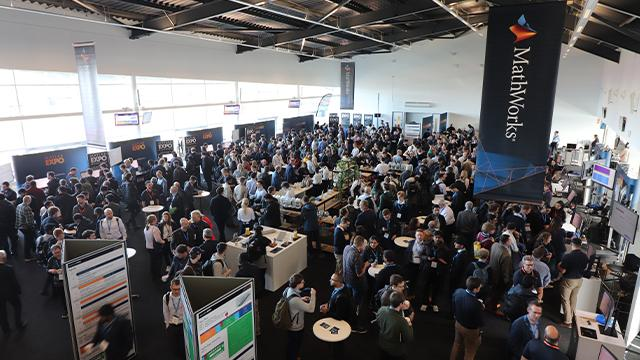
UK Expo 2025






コメント
コメントを残すには、ここ をクリックして MathWorks アカウントにサインインするか新しい MathWorks アカウントを作成します。