
Agentic AI, markets, and risk: MathWorks Finance Conference 2026
Explore practical approaches to financial modeling, portfolio decisions, and risk analysis from MathWorks Finance Conference 2026. Held October 13–14, the conference featured nine recorded talks, covering agentic AI workflows, economic data and forecasting, investment strategies, and risk modeling. Browse the recordings and presentation slides by theme below.
Browse all nine talks and slides
Data, forecasting, and agentic AI workflows
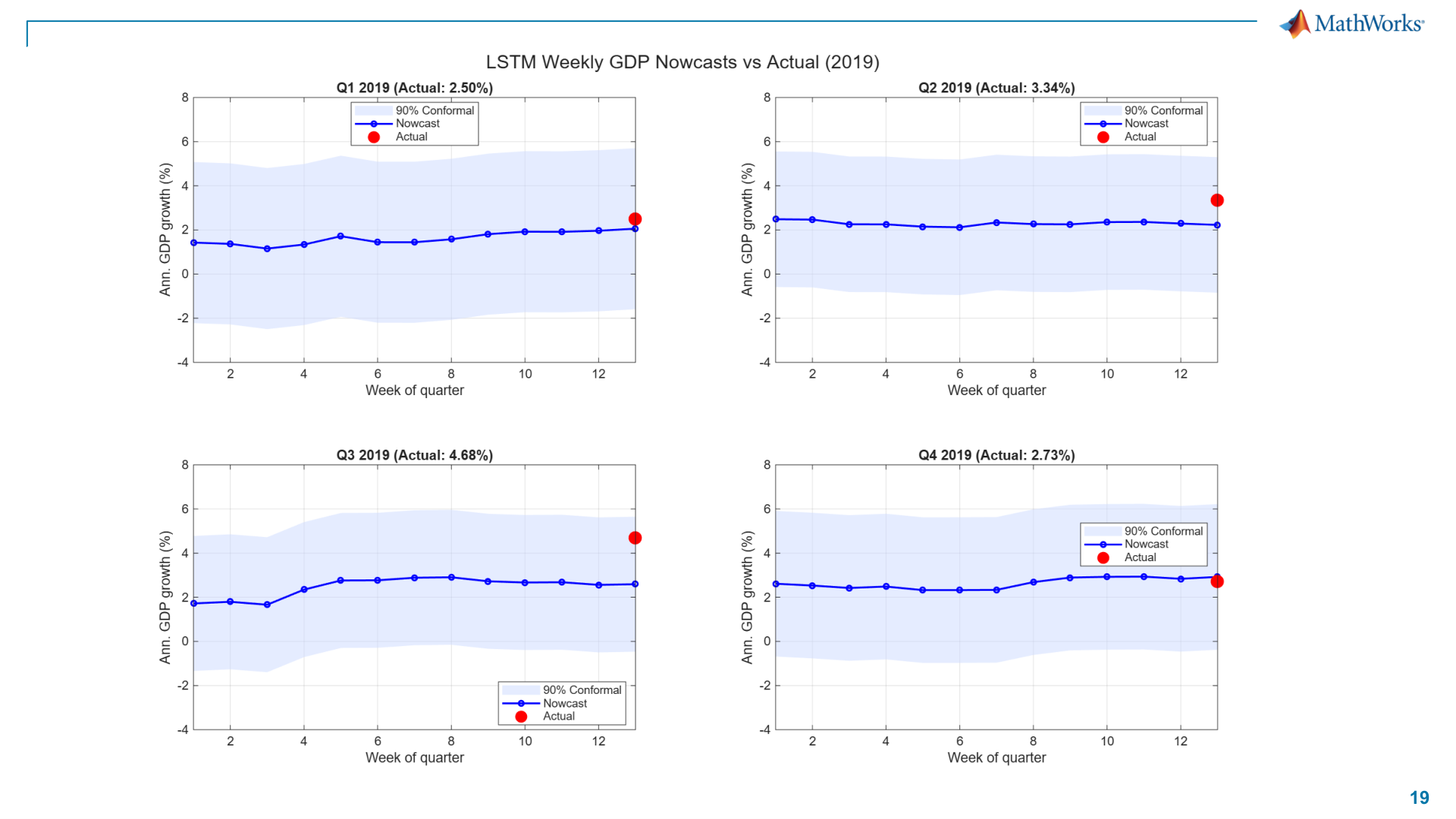
Forecasting the Present: Practical Nowcasting with Mixed-Frequency Data
 |
Kevin Shea MathWorks How can teams build a nowcast when high- and low-frequency releases arrived at different times? Kevin Shea compared dynamic factor and deep learning methods using mixed-frequency data, staggered releases, and real-time vintages. He closed by exploring how agentic AI could support custom nowcasting apps and make what-if analysis more accessible. |
MatSDMX: SDMX Connector for MATLAB
 |
Attilio Mattiocco Banca d’Italia Reliable data access also mattered for automated workflows. Attilio Mattiocco presented MatSDMX, a MATLAB toolbox for retrieving time-series data from providers that uses the SDMX (Statistical Data and Metadata eXchange) standard. The session showed how automated data retrieval could feed analytical models. Watch the recording (18:46) | View the slides
|
From Prompts to Priors: Agentic AI Workflows for BVAR and DSGE Modeling in MATLAB
 |
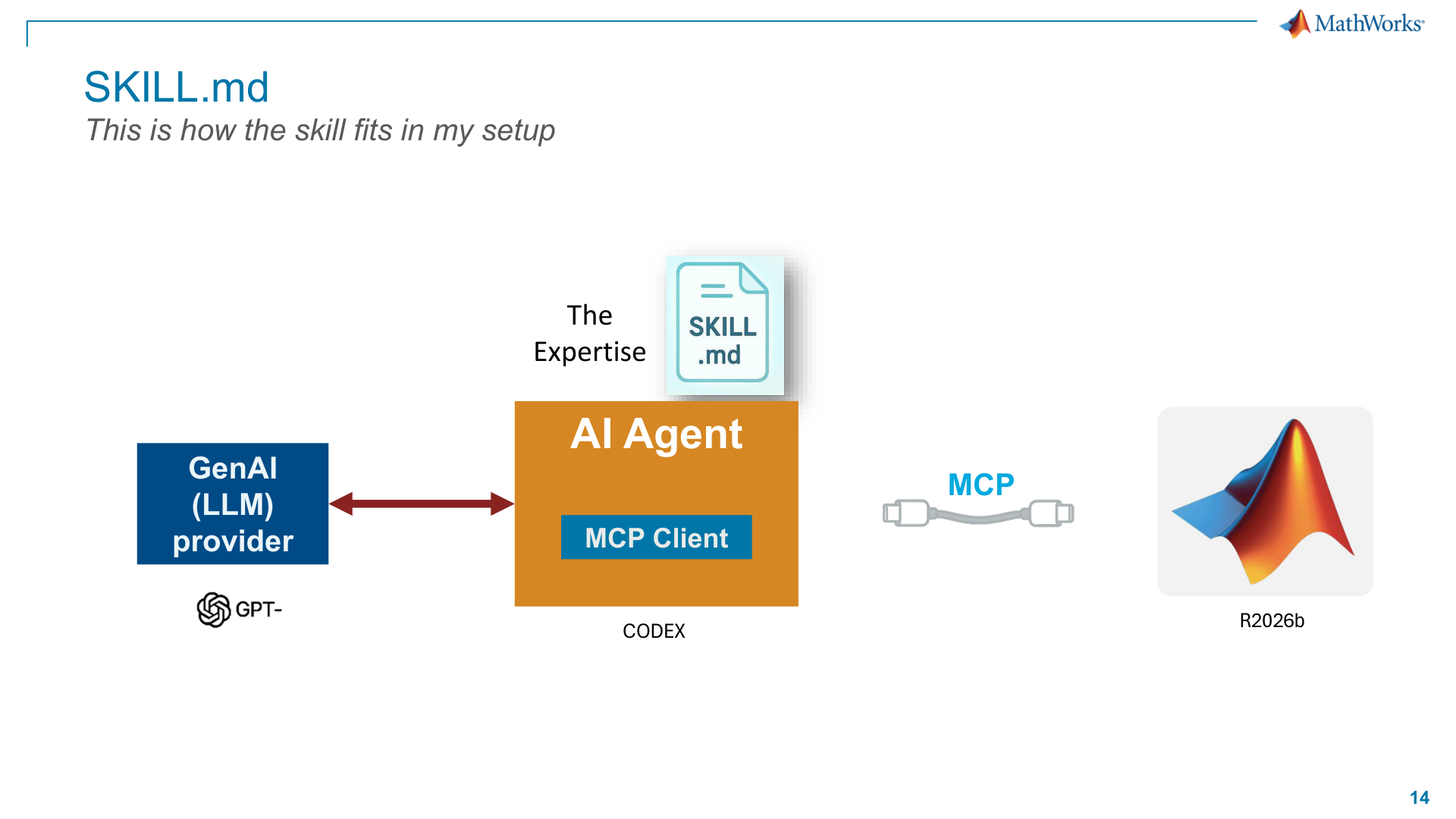
Eduard Benet Cerdà MathWorks The session put agentic AI in focus. Eduard Benet Cerdà connected coding agents to MATLAB through the Model Context Protocol (MCP) and added domain-specific skills for Bayesian vector autoregression (BVAR) and dynamic stochastic general equilibrium (DSGE) workflows. Examples traced the path from published research to implemented models and an interactive web interface. The talk also emphasized why planning, prompting, and validation mattered. |
Goal-based investing and portfolio strategies
Beyond the Efficient Frontier: Dynamic Strategies for Long-Term Investment Goals
 |
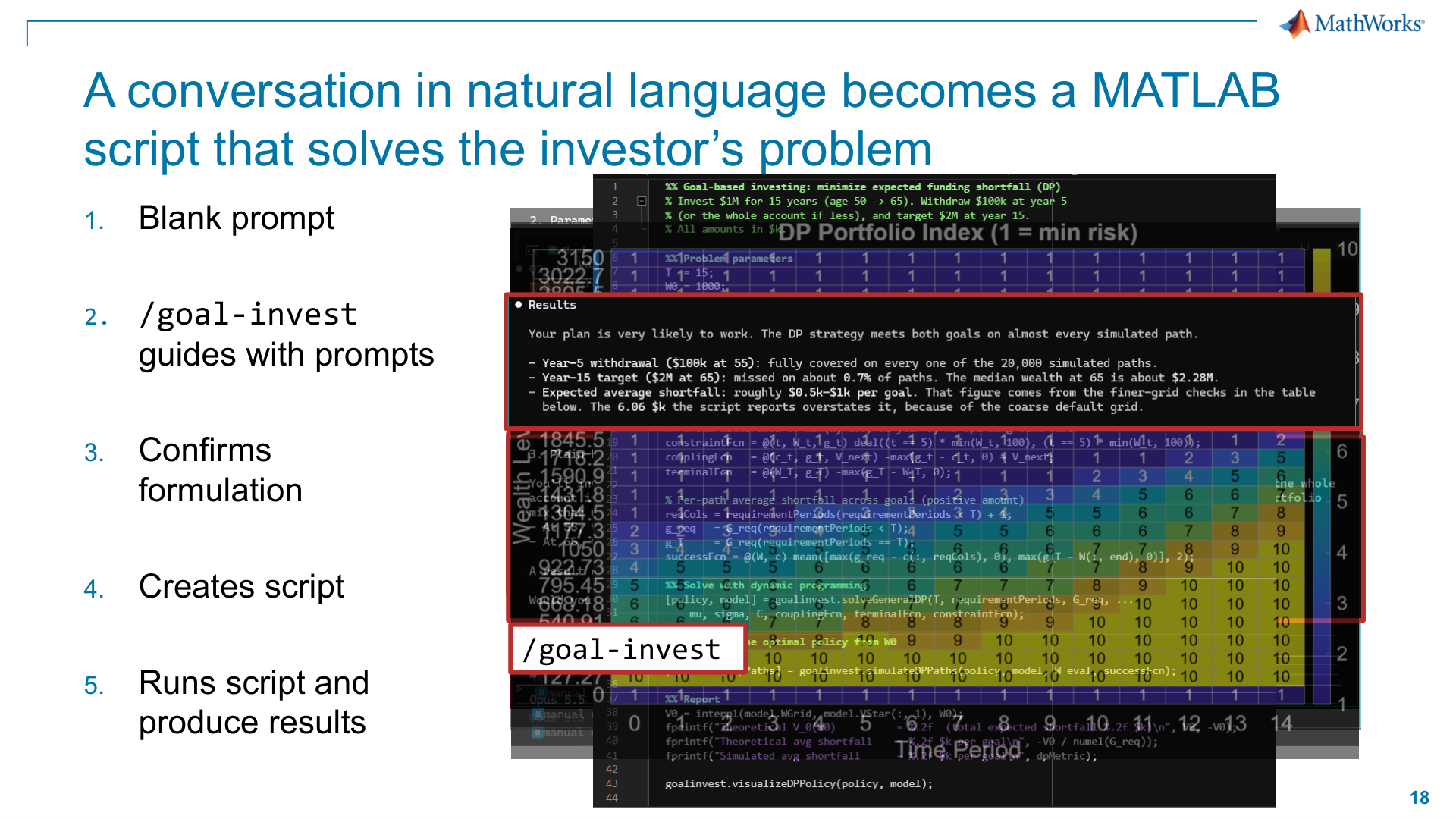
Alejandra Peña-Ordieres MathWorks Long-term goals such as retirement requires decisions across many periods. Alejandra Peña-Ordieres compared policy-based and simulation-driven approaches, then demonstrated how an agentic AI coding workflow could turn a plain-language investment goal into a MATLAB script for a goal-based model. |
Market Regime-Aware Goal-Based Portfolio Management Using Reinforcement Learning

Chunlan Wang |

Yuchen Dong |
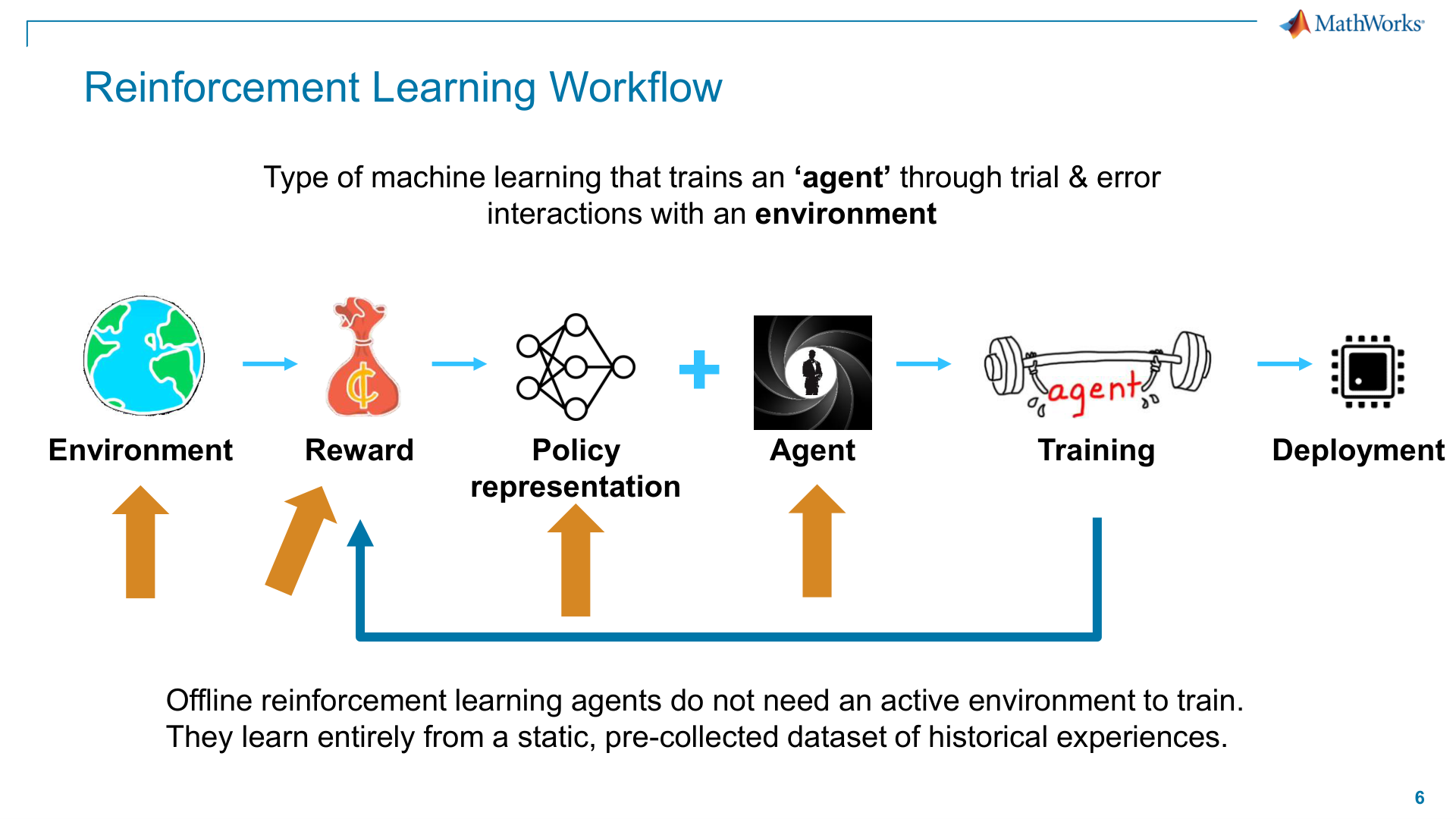
A different kind of AI appeared here: offline reinforcement learning learned portfolio policies from market data, including sentiment and changing regimes. Chunlan Wang and Yuchen Dong used goal-based wealth management as an illustrative case. In this talk, the agent was a learned portfolio policy, not a coding agent; the presenters did not position the example as a complete investment strategy.
Watch the recording (19:35) | View the slides
Flexible Enhanced Indexation: Balancing Outperformance and Risk Using Stochastic Dominance and OWA
 |
Francesco Cesarone Università degli Studi di Roma Tre Francesco Cesarone took a different route to portfolio design: enhanced indexation that balanced benchmark outperformance with downside risk. He presented a flexible framework using stochastic dominance and the ordered weighted average (OWA) operator. The weighting choices showed how the optimization could reflect different preferences for return, risk mitigation, and portfolio stability. Watch the recording (24:16) | View the slides
|
Scenarios, production risk, and model validation
Multi-Period Entropy Pooling in Linear State Space Models: Market Views and Stress Scenarios
 |
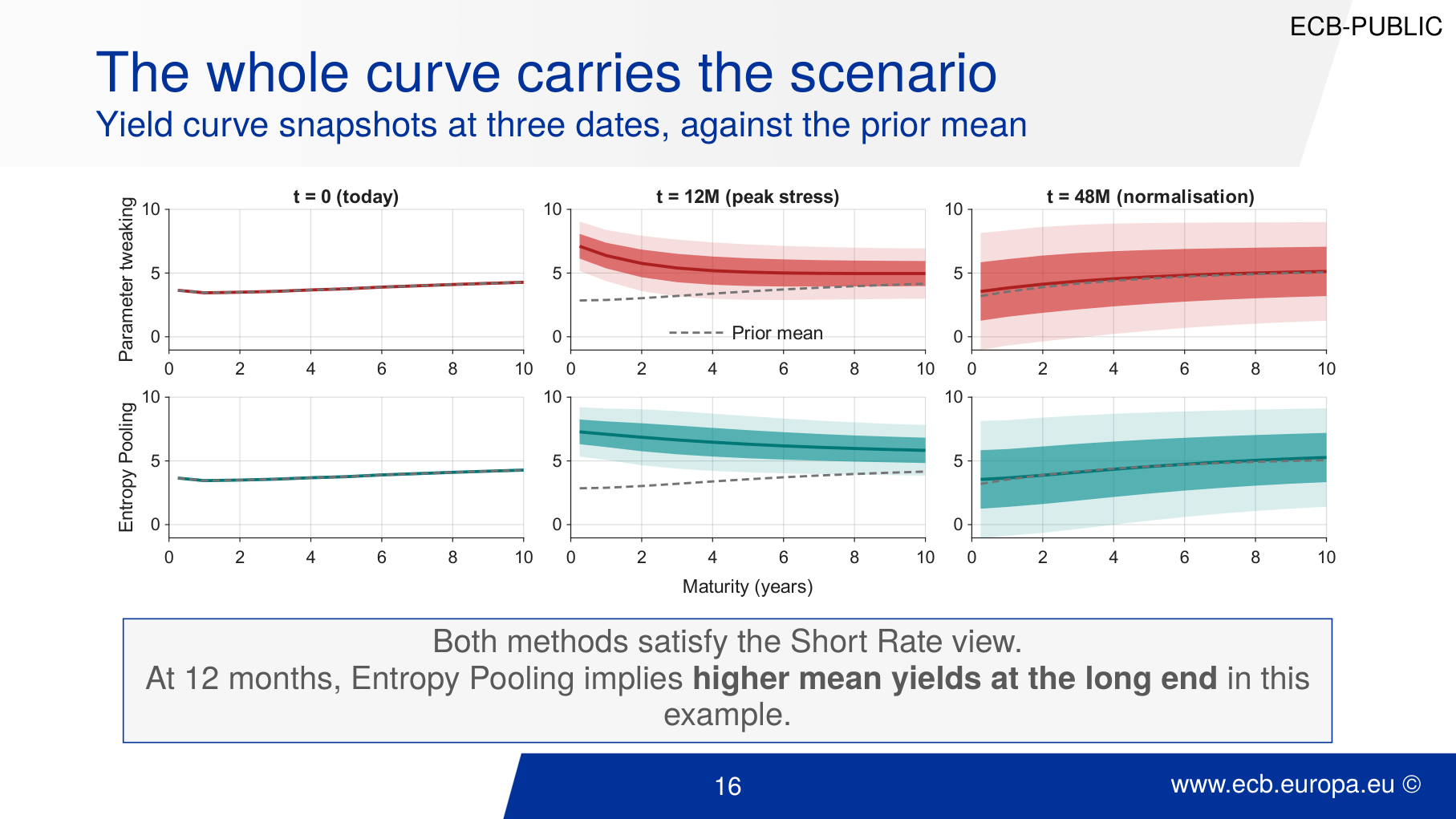
Manuel Polley European Central Bank How did market views change a yield curve and its risk measures? Manuel Polley introduced a multi-period Entropy Pooling framework for linear state-space models. The framework keeps the model’s structural equations fixed and uses minimum relative entropy to adjust stochastic-driver distributions to match views across horizons. It propagates those updates through factors, yields, portfolio implications, and risk measures. Examples included a short-rate path based on Federal Open Market Committee (FOMC) projections and a severe rate-hike stress scenario. |
Speed Meets Accuracy: A Modular Simulation Platform for Modern Risk Steering
 |
Philipp Wolters Generali How can a risk platform evolve as models, use cases, and requirements change? Philipp Wolters shared a case study of a production simulation platform for risk steering under Solvency II. He discussed its modular design across data processing, scenario generation, risk calculation, aggregation, and reporting, with lessons gathered over a decade of development. Watch the recording (26:38) | View the slides
|
Heston FEM Option Pricing in Log(P)–VaR Coordinates
 |
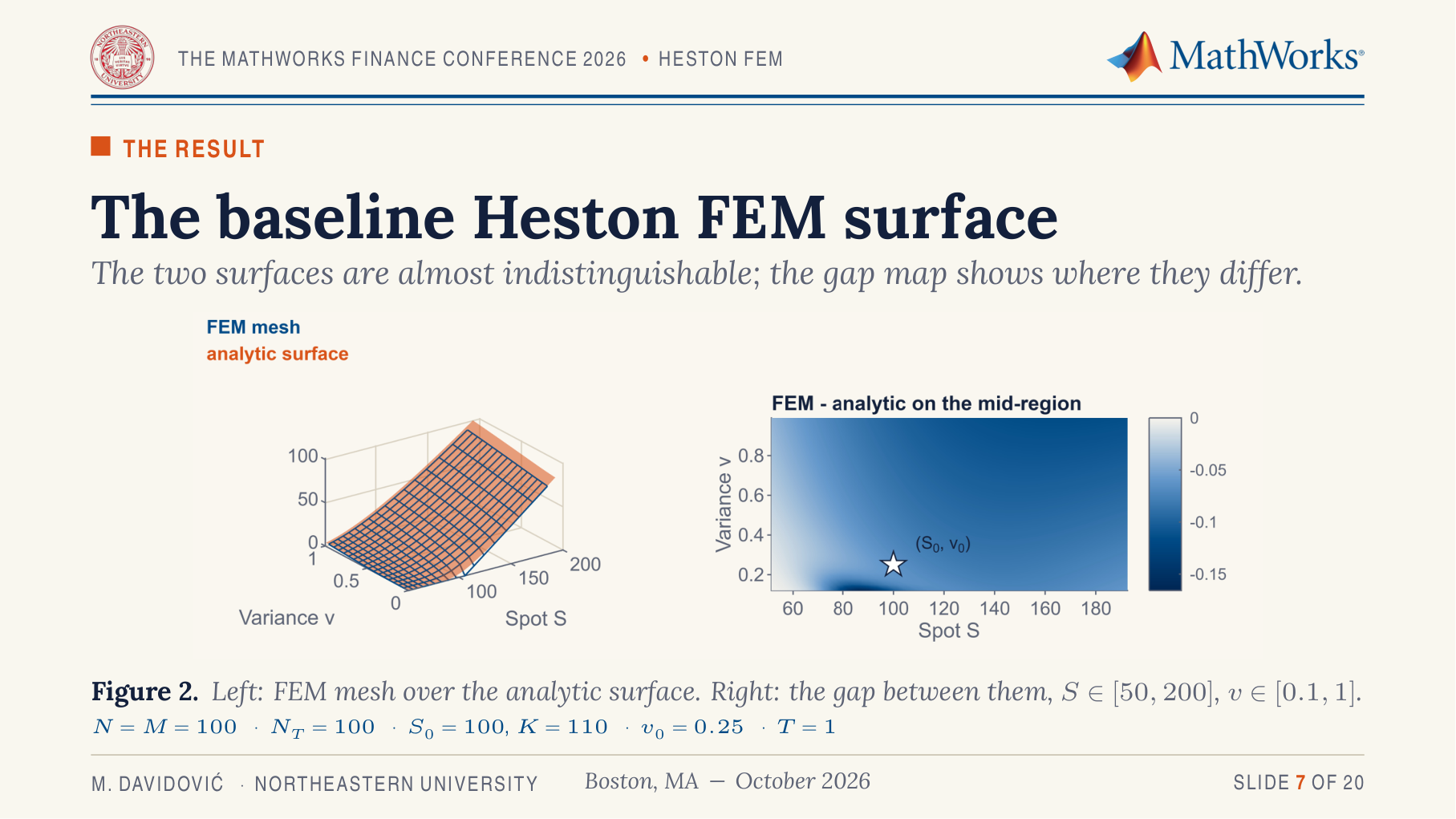
Milivoje Davidović Northeastern University What does it take to build and check a numerical option-pricing method? Milivoje Davidović presented a finite-element solver for European call options under the Heston stochastic volatility model. The session followed mesh refinement, structural checks, and comparisons with analytical Heston prices and a Black–Scholes finite-element baseline. |
Conference recordings and slides
Across the program, agentic AI emerged as one thread in a broader finance workflow. The sessions underscored the role of data access, domain-specific methods, scenario analysis, and validation. Browse all nine MathWorks Finance Conference 2026 recordings and slides.


评论
要发表评论,请点击 此处 登录到您的 MathWorks 帐户或创建一个新帐户。