
Where are they now?- Tushar Goyal ,Volvo Cars
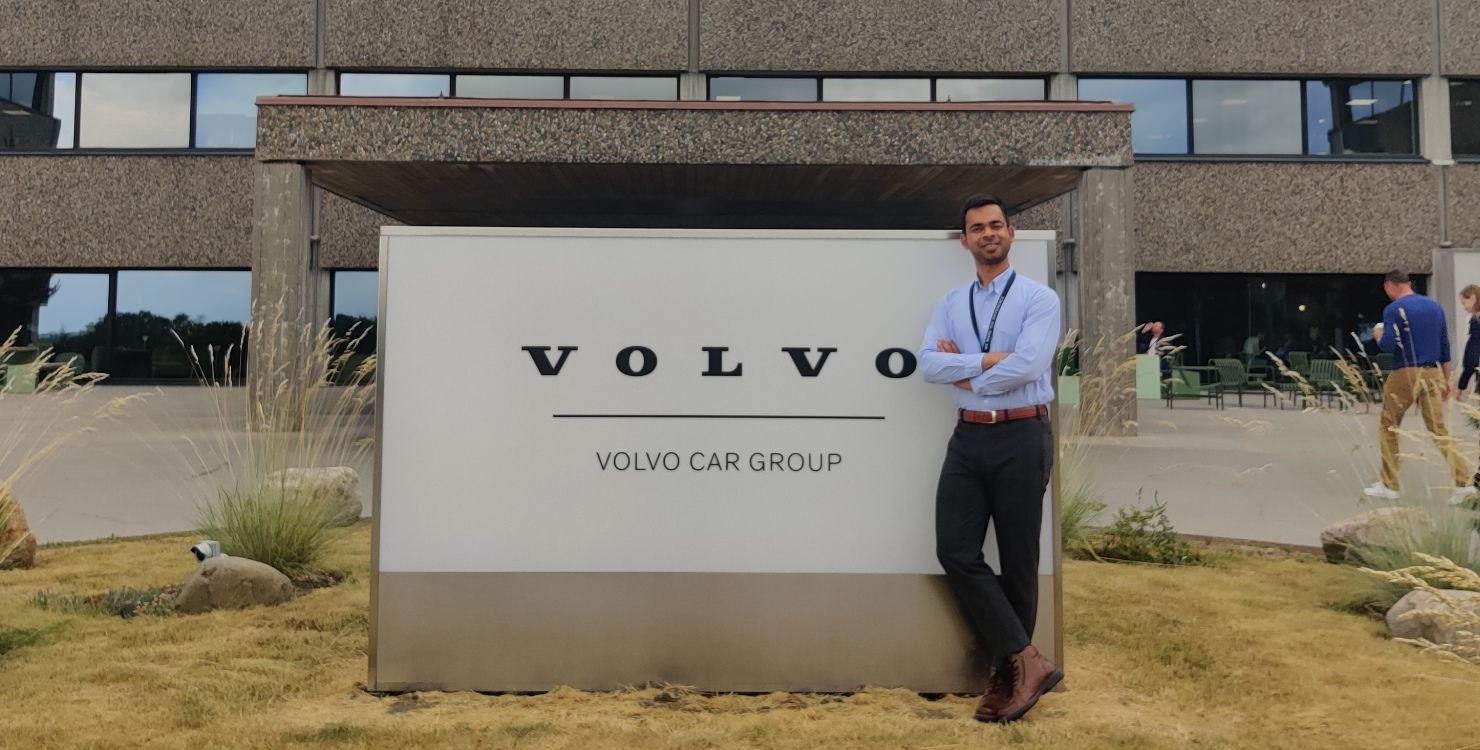
Today, we’re talking to Tushar Goyal, a Software Engineer at Volvo Cars in Sweden. He graduated from TU Delft in 2022 with an MSc in Mechanical Engineering and participated in Formula Student competitions in the Netherlands, Austria, and Germany.
Why did you chose to get involved the competition?
Formula Student challenges students to put theory to practice, often before they are well-versed with industrial processes. Always questioning the real-world application of the subjects I studied, I chose to participate and compete in Formula Student to satiate my curiosity and to learn further what I needed to build a car that does not only go from A to B, but does so in the least time while optimizing all the resources it has.
What was your role on the team?
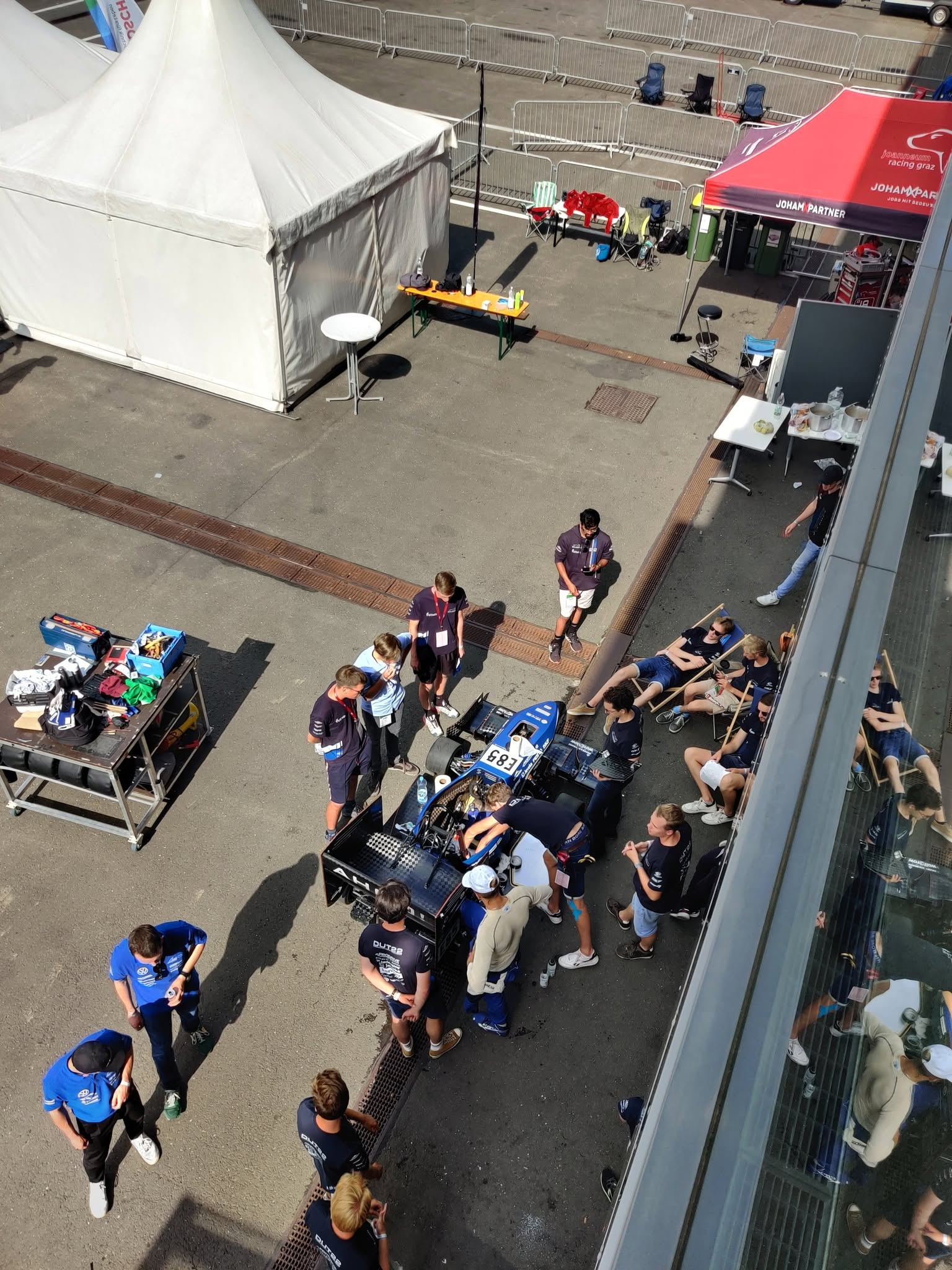
I joined Formula Student Team Delft as a power train engineer to develop and test motor control software for its EV.
How did you use MATLAB/ Simulink in the competition and/or academic work?
During my academic studies and as part of the team, I used Simulink to intuitively develop and maintain physics-based models without having to implement the entire application manually in C. I then utilized code generation capabilities from MathWorks products to produce the embedded software and test it on e-machine test rigs and in the vehicle.
Do you think the skills you gained using these tools has helped you in your professional career? If so, how?
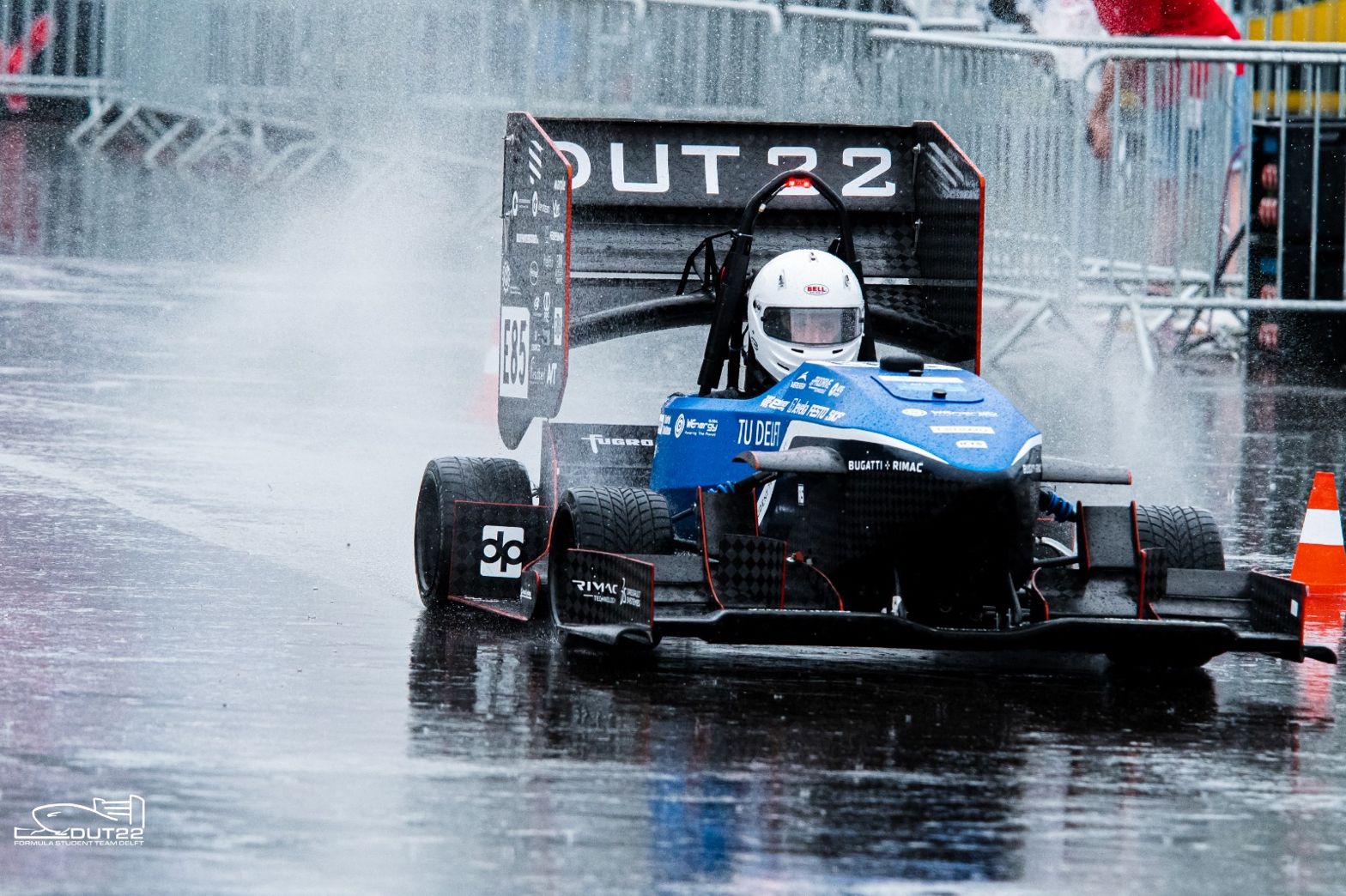
I, together with the team, exploited these tools to develop and test a software that earned us several accolades at the competition, and that earned me industry-relevant skills that I employ in my role even today. I was able to successfully use and test these tools, often failing, but also learning by making mistakes. I failed faster, and hence learnt faster, which groomed me to enter the corporate world.
Did your hands-on experience of in the competition help to prepare you for your first role in industry?
Absolutely! I gained hands-on experience with inverters, test rigs, and software development and testing through the competition experience that I might not otherwise have had due to limited internship opportunities and visa challenges as an international student. Working extensively with MATLAB and Simulink, which are widely used across the automotive industry, helped me develop practical engineering and model-based design skills that translated directly into my professional career.
In your current role at Volvo Cars do you use MATLAB/Simulink?
Today, I continue my formula student work at Volvo Cars, my present employer. I no longer build performance vehicles, but use the same tools – MATLAB/Simulink – to build production-ready inverter software that drive our electric vehicles.
What big project you are working on right now?
I am a proud contributor of the inverter software of two of our latest cars on road already: Volvo ES90 and EX60! Among other projects, I developed and tested thermal control strategy to enable the driver to extract maximum power out of the vehicle while keeping the powertrain components thermally safe.
What advice would you give young engineers seeking employment post-grad?
Seek opportunities to build real-world products exploiting the concepts you learn in classrooms. It is incredibly rewarding to apply, let’s say, that one lecture on coordinate geometry or that on optimization methods to a product that people purchase globally.
Is there anything else that you would like to add?
I thank MathWorks for granting me the tools that enabled me to experiment, visualize, test and build my engineering knowledge into high-demand products that I see everyday. Thank you MathWorks!
Learn more about MathWorks supports competition teams with complimentary software and getting started resources here.


댓글
댓글을 남기려면 링크 를 클릭하여 MathWorks 계정에 로그인하거나 계정을 새로 만드십시오.