
From Inspiration to Grand Prize: How MATLAB Helps You Stand Out in Electronic Design Competitions
Every year, outstanding graduate students from fields such as electronics, communications, computer science, and integrated circuits gather at the China Graduate Electronics Design Competition (GEDC).
There, they tackle cutting-edge technical challenges, receive in-depth guidance from industry mentors, and collaborate with like-minded peers—gaining valuable experience in teamwork and technical development.
This year, the 20th GEDC successfully concluded in mid-August, with numerous innovative projects standing out. Among them, the teams that received MathWorks Awards focused on advanced fields such as communications, power electronics, and robotics.
They proposed innovative solutions to address current research hotspots and real-world societal needs. Some of the winning team members are research experts, others are engineering talents, and some started out simply as newcomers curious about electronic design. Yet all of them used MATLAB to accelerate the design and development of their projects, ultimately earning prestigious national-level awards.
In today’s blog, let’s take a closer look at how the winning teams of the MathWorks Awards at GEDC used MATLAB to ignite their dreams and shape the future!
Winning Projects at a Glance
Channel Characteristic Modeling and Hardware-in-the-Loop Simulation Integrated Verification System (“Leading Goose and Vanguard” team, Beijing Jiaotong University)
Targeting emerging application scenarios such as 5G/6G and the industrial internet, the team developed a comprehensive integrated system that combines channel measurement, modeling, and hardware link verification. Leveraging an RFSoC-based multi-phase parallel architecture, the system achieves ultra-wideband channel simulation at 1 GHz.
The team also introduced an automated modeling platform and high-fidelity channel reproduction for multiple scenarios, supporting various multi-source modeling methods. This greatly enhances the reliability and efficiency of communication testing in complex environments.
MATLAB was used to implement key algorithms for channel modeling, such as CIR calculation, path loss fitting, and Doppler analysis. Simulink was employed to build link-level simulation models, ensuring a high degree of consistency between channel parameters and hardware behavior.
Channel parameters generated by MATLAB can be seamlessly imported into the FPGA simulator, facilitating collaborative software and hardware development. This significantly accelerated progress on challenging tasks such as 1 GHz ultra-wideband signal processing.
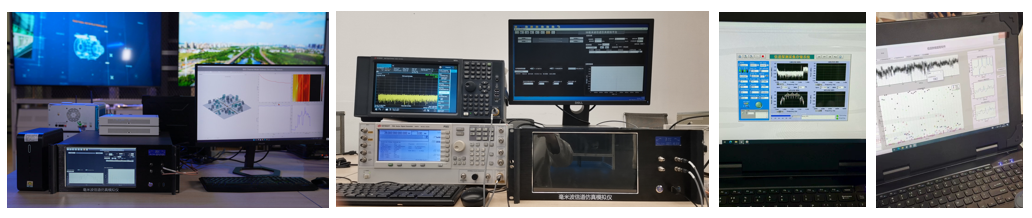
Channel Emulation Simulator and Channel Measurement & Parameter Extraction User Interfaces
Design and Implementation of an Integrated Communication and Remote Sensing Low-Earth Orbit Satellite System (“Xinglian ComSense Squad” Team, Zhejiang University)
Aiming at the future demands of 6G and space-based information systems, the team innovatively integrated broadband communication and high-resolution remote sensing into a single low-Earth orbit satellite, achieving a deep convergence of communication and remote sensing functions.
This approach provides new solutions for fields such as emergency rescue and intelligent transportation. The project adopts Orthogonal Delay-Doppler Division Multiplexing (ODDM) waveforms and an integrated transmission protocol, overcoming the limitations of traditional discrete systems. This deep integration significantly enhances the robustness of satellite-to-ground communication and the precision of SAR imaging.
In this project, MATLAB was used not only to implement complex integrated communication and remote sensing protocols, as well as baseband processing algorithms, but also to fully leverage features such as high-dimensional matrix operations, multithreading, and GPU parallel computing.
This enabled efficient processing of large-scale data and ensured real-time performance, providing a solid foundation for the high-performance requirements of satellite-to-ground communication and SAR imaging.
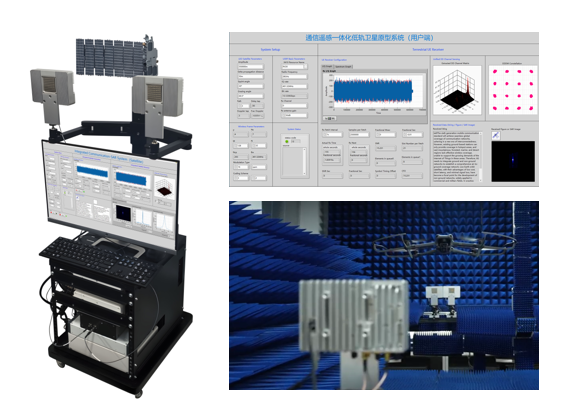
Integrated Communication-Sensing LEO Satellite System Prototype, User Interface, and Test Scenarios
Full SiC Multifunctional Photovoltaic Inverter (“EnerVision” Team, Huazhong University of Science and Technology)
To address issues such as slow switching speeds and high losses in traditional photovoltaic inverters that use Si-IGBTs, the team innovatively adopted SiC-MOSFETs as the main power devices, achieving leading metrics such as a peak conversion efficiency of 99% and a volumetric power density of 1.5 kW/L.
The team introduced several technological innovations, including a low-parasitic silicon carbide power bridge design, lightweight passive filter components, and high-bandwidth differential/common-mode power flow decoupling control.
These advancements significantly improved the inverter’s conversion efficiency, power density, and control performance, providing both theoretical and practical foundations for the development of high-performance domestic photovoltaic inverters.
During the development of the project, MATLAB and Simulink played a crucial role. The team used MATLAB for double-pulse test data processing and independently developed test scripts, reducing development costs.
In key stages such as modulation strategy formulation, passive filter component design, and controller parameter tuning, MATLAB/Simulink was used for loss calculation, parameter optimization, and simulation verification, greatly improving development and debugging efficiency.
For example, by using MATLAB programming to optimize the filter inductor design, the inductance was reduced by about 30%. With Simulink, the team built a complete system model and combined it with S-Function, increasing controller development efficiency by approximately 30%.
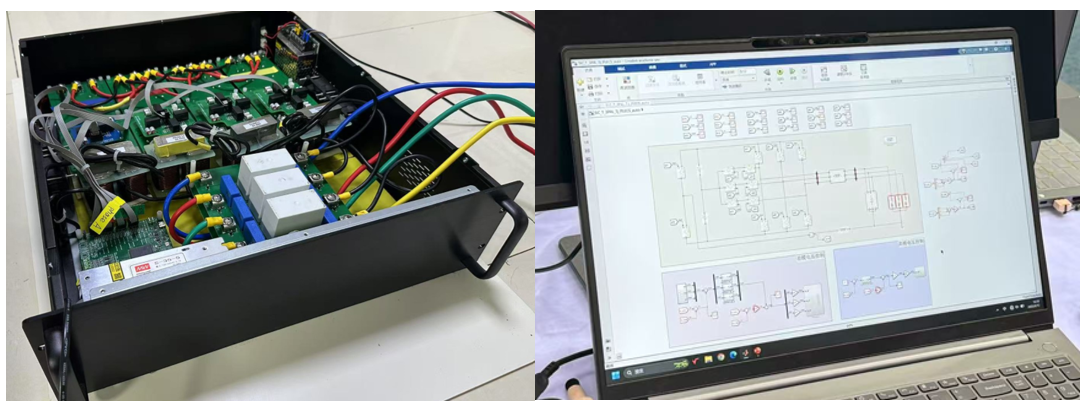
Full SiC Multi-Functional PV Inverter Prototype and Simulink Model
RailGaidian – Monorail Robot for Clustered Railway Fastener Maintenance in Intelligent Infrastructure (“RailGaidian” Team, Beijing Jiaotong University)
To meet the demand for efficient and intelligent maintenance of China’s vast railway network, the team developed a modular, clustered monorail robot system capable of automatic detection, removal, and replacement of railway fasteners. This greatly enhances the automation and safety of railway maintenance operations, providing strong technological support for the strategy of building a transportation powerhouse.
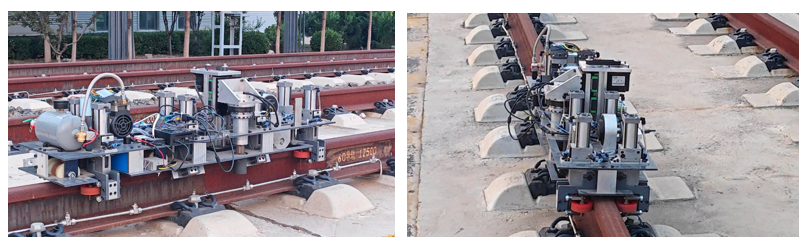
RailGuardian Robot Operating On a Monorail Track
The project achieved several technological breakthroughs in areas such as structural design, 3D points cloud recognition, GPR pressure prediction, and path planning. The team used MATLAB and Simulink for robotic arm dynamics analysis, point cloud data processing, algorithm modeling, and simulation.
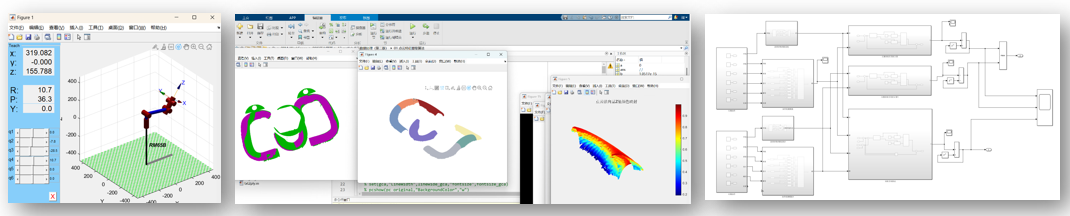
Robotic Manupulator Dynamics Analysis, Point-cloud Data Processing, and Simulink Modeling & Simulation
Smart Swallowing Assistant – Self-Sensing Multi-Modal Soft Gripper Based on Annular Optical Waveguide (“Grab & Learn” Team, Nanjing University of Information Science & Technology)
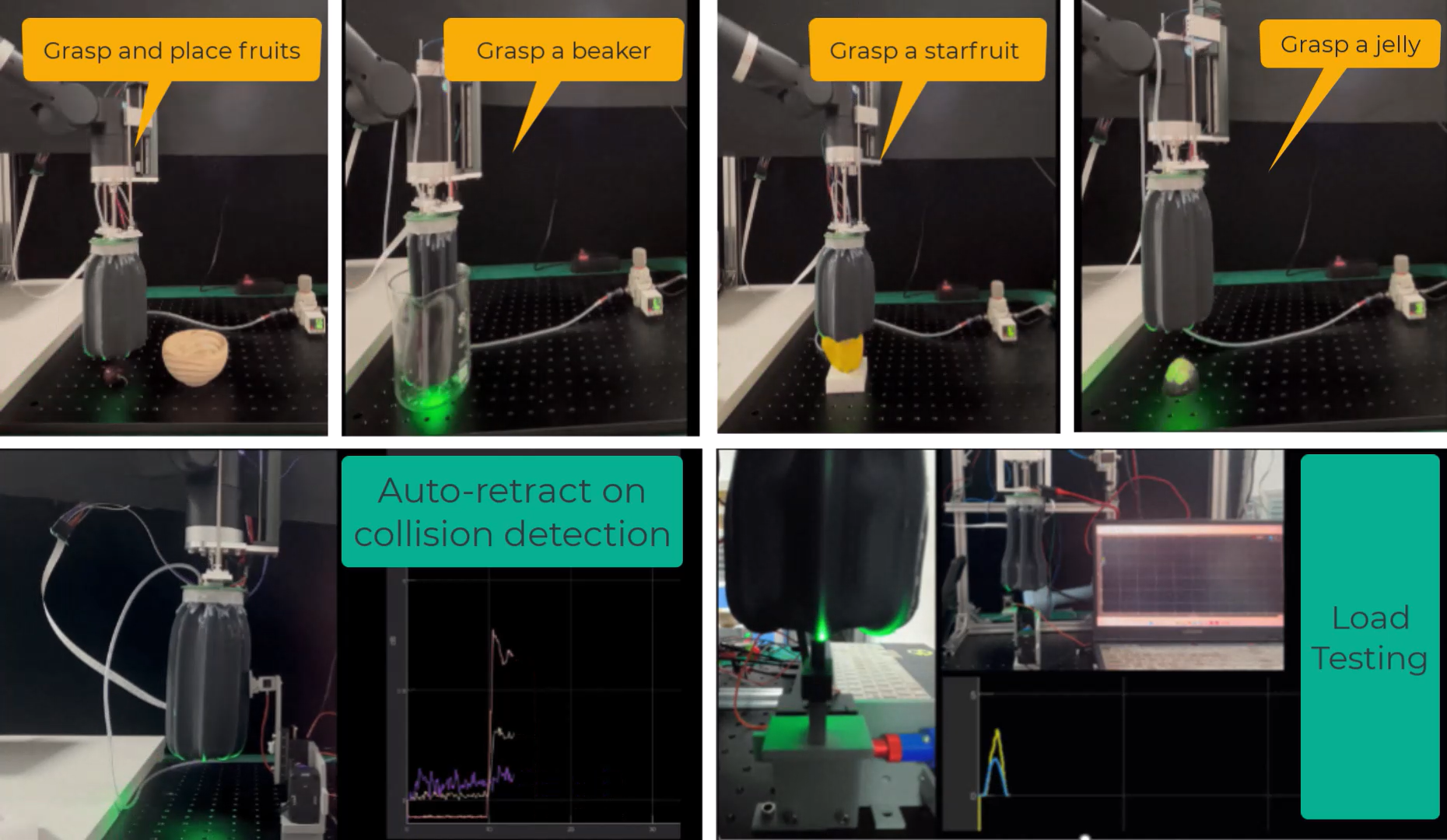
Aimed at applications in industrial automation and medical-assisted surgery, the team innovatively integrated optical waveguide sensors with soft robotic structures, achieving unified actuation and sensing.
Inspired by the physiological movements of sea anemones, the device features three biomimetic working modes: expansion, swallowing, and tactile sensing at the end-effector.
It can sense the shape, hardness, and roughness of objects in real time and, by combining multimodal signals with machine learning algorithms (such as KNN and LSTM), achieve high-precision intelligent recognition.
In this project, the team used Simulink to build modules for sensor signal acquisition and pneumatic drive control, while MATLAB was employed for data processing, feature extraction, and machine learning model training.
They also innovatively implemented real-time radar chart visualization of eight-channel sensor signals, greatly improving experimental efficiency and the intuitiveness of results presentation.
How Did MATLAB Help the Winning Teams?
MATLAB played a crucial role in the success of the winning teams by providing a comprehensive platform for algorithm development, data analysis, simulation, and hardware integration.
During their preparation for the competition, the teams made full use of the following advantages of MATLAB and Simulink:
- Integrated Development Workflow: MATLAB and Simulink cover the entire process from algorithm design, simulation, and data processing to hardware co-debugging, significantly shortening development cycles.
- High-Performance Parallel Computing: Fully leverage GPU acceleration, matrix operations, and multithreading capabilities to meet stringent requirements for real-time and large-scale data processing.
- Software-Hardware Co-Innovation: Support seamless integration between models and hardware, facilitating rapid algorithm deployment and system performance optimization.
- Powerful Visualization and Debugging Tools: Enhance team collaboration efficiency and project presentation, accelerating experimental iteration and problem-solving.
- Abundant Learning Resources and Community Support: Official documentation, case studies, and forums provide strong support for team members to quickly get started and tackle challenges.
MATLAB & Simulink not only accelerate innovation and enhance engineering implementation capabilities but also inject new momentum into the future development of electronic information industry and intelligent society.
Insights and Advice from Winning Teams
The winning teams not only achieved breakthroughs in technological innovation but also gained valuable experience in learning and applying MATLAB and Simulink. Here are some insights and advice they shared:
– Beijing Jiaotong University’s “Leading Goose and Vanguard” team offered the following advice:
“When learning and applying MATLAB and Simulink, we recommend starting with official training, documentation, and case studies. Combine these resources with hands-on practice using the Communications Toolbox, and gradually master script writing, model building, and hardware co-debugging skills through project-driven learning.”
– Zhejiang University’s “Xinglian ComSense Squad” members shared:
“MATLAB has concise syntax, is easy to learn, and offers abundant resources, making it especially suitable for scientific simulation and engineering implementation. We suggest not only focusing on the syntax, but also understanding MATLAB’s execution mechanisms and its relationship with hardware deployment, such as high-dimensional matrix operations and parallel computing.”
– Nanjing University of Information Science & Technology’s “Grab & Learn” team summarized:
“Learning by doing and problem-driven approaches are the most effective ways to master MATLAB. We recommend that beginners deepen their understanding step by step through real projects and make good use of official MATLAB documentation and forum resources. Code standards and model readability are crucial for team collaboration. Future participants should familiarize themselves early with data acquisition and signal processing workflows, and practice with real-world cases as much as possible.”
Members of these teams all expressed that the powerful features and rich ecosystem of MATLAB have greatly improved their project development efficiency and research innovation capabilities!
Empowering Your Innovation Journey with MATLAB & Simulink
Whether you are a research enthusiast, engineering expert, or newcomer to electronic design, MATLAB and Simulink can be your “best partners” on the road to innovation.
They not only provide a strong technical foundation for participating teams, but also serve as important platforms for driving innovation, accelerating engineering practice, and achieving deep integration of industry, academia, and research.
With MATLAB and Simulink, you can make team collaboration more efficient, turn your ideas into reality faster, and pave a broader path for your future studies, competitions, and research!
Congratulations to all the winning teams! Now it’s your turn!






댓글
댓글을 남기려면 링크 를 클릭하여 MathWorks 계정에 로그인하거나 계정을 새로 만드십시오.