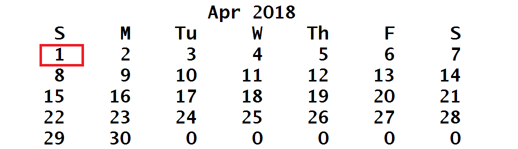
Today is Easter Sunday. Why? How is the date of Easter determined?... 更多内容 >>

Note
Cleve’s Corner: Cleve Moler on Mathematics and Computing has been archived and will not be updated.
Today is Easter Sunday. Why? How is the date of Easter determined?... 更多内容 >>

Pi DayHappy Pi Day, 3/14.Here are 10,000 digits of π. Notice the six consecutive 9's in the sixth row, digits 763 through 768. n = 100; % Get pi from Symbolic Toolbox. p =... 更多内容 >>


ContentsThanks ezplot('(x^2+y^2-1)^3 = x^2*y^3', ... [-1.5,1.5,-1.2,1.5]) colormap([.5 .2 .2]) ThanksEdward Scheinerman, The Mathematics Lover's Companion, Yale University Press,... 更多内容 >>


The first computer that I seriously used was the Burroughs 205 Datatron. I actually used two different machines, one at Caltech for two years in 1959-61 and one at the University of Utah in the summer of 1960. Both the technology and the style of usage were wildly different from today's computers.... 更多内容 >>
Two days ago I wrote about random points in a square. At the last minute I added the paragraph asking about the generalization to random points in a cube. I have to admit that I didn't check the Web to see what was known about the question.... 更多内容 >>

How far apart can you expect two points chosen at random in the unit square to be? I found this problem on the YouTube channel maintained by Presh Talwalkar, Mind Your Decisions. He correctly calls it a very hard puzzle. At first, I guessed the answer might be $1/2$. But the correct answer is more interesting than that.... 更多内容 >>
A Logo ZoetropeA quick post to point my readers to Ned Gulley's post in MATLAB Community, A Galloping Logo Zoetrope. Don't know what a Zoetrope is? Ned explains.Get the MATLAB code (requires... 更多内容 >>

Do not get involved in a bar bet with Brad Efron and his dice until you have read this.... 更多内容 >>
