
MathWorks Minidrone Competition – Europe 2025: Model‑Based Design for Autonomous UAVs
The MathWorks Cambridge office hosted the Europe 2025 edition of the MathWorks Minidrone Competition, welcoming students from universities across Europe. The 2025 edition drew applications from over 40 student teams.
Following a structured simulation and evaluation phase, six top performing teams were selected to advance to the final In‑person deployment round at the MathWorks Cambridge office. For students who took part in the MathWorks Minidrone Competition – Europe 2025, the experience extended well beyond the final results. The competition accelerated learning, strengthened confidence, and challenged teams to apply classroom learnings in a real engineering setting.
For those less familiar with the Minidrone Competition, this blog takes a closer look at what the program offers, why it is relevant in an academic context, and what made the Europe 2025 edition a meaningful and memorable experience for participating students.
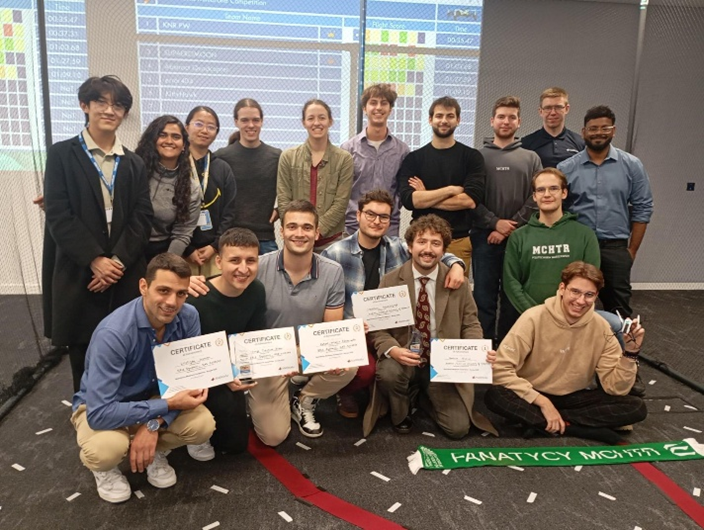
Student teams at the MathWorks Cambridge Office
What Is the MathWorks Minidrone Competition?
The MathWorks Minidrone Competition is a structured, academic program designed to help university students apply classroom theory to real-world autonomous systems using model-based design.
The competition challenges students to design, simulate, and deploy autonomous flight control algorithms for a real minidrone using Simulink, following the same workflow used by engineers in industry from system modelling and simulation to hardware deployment and validation.
By combining curriculum-aligned concepts with hands-on experimentation, the program enables students to move beyond theoretical understanding and gain practical experience with system modelling, control design, autonomous guidance and navigation using image processing and Stateflow.
The Simulation Round: Where Designs Took Shape
The Europe 2025 edition of the MathWorks Minidrone Competition challenged students to design an autonomous minidrone line follower using Simulink, beginning with a rigorous simulation round before progressing to deployment on a real Parrot Mambo minidrone.
Launched earlier in the year, the competition invited university teams across Europe to start their journey in simulation, where they developed and validated their algorithms using Simulink. Following a structured submission and evaluation process, top‑performing teams progressed to the final deployment round, where their models were tested on real hardware.
This simulation-first phase was not a preliminary exercise, but a deliberate engineering filter. Teams were evaluated on accuracy, robustness, level of tool usage, and solution optimization of their models, reinforcing the principle that strong simulation is a prerequisite for reliable hardware deployment. This journey mirrored industry workflows—model, test, refine, and deploy—giving students an authentic taste of modern engineering practice.
Simulation of autonomous minidrone flight
The competition culminated in live finals held in November 2025 at the MathWorks Cambridge Office, where shortlisted teams came together to deploy, test, and compete with their algorithms on physical minidrones.
At the MathWorks Cambridge Office: Deployment on Hardware
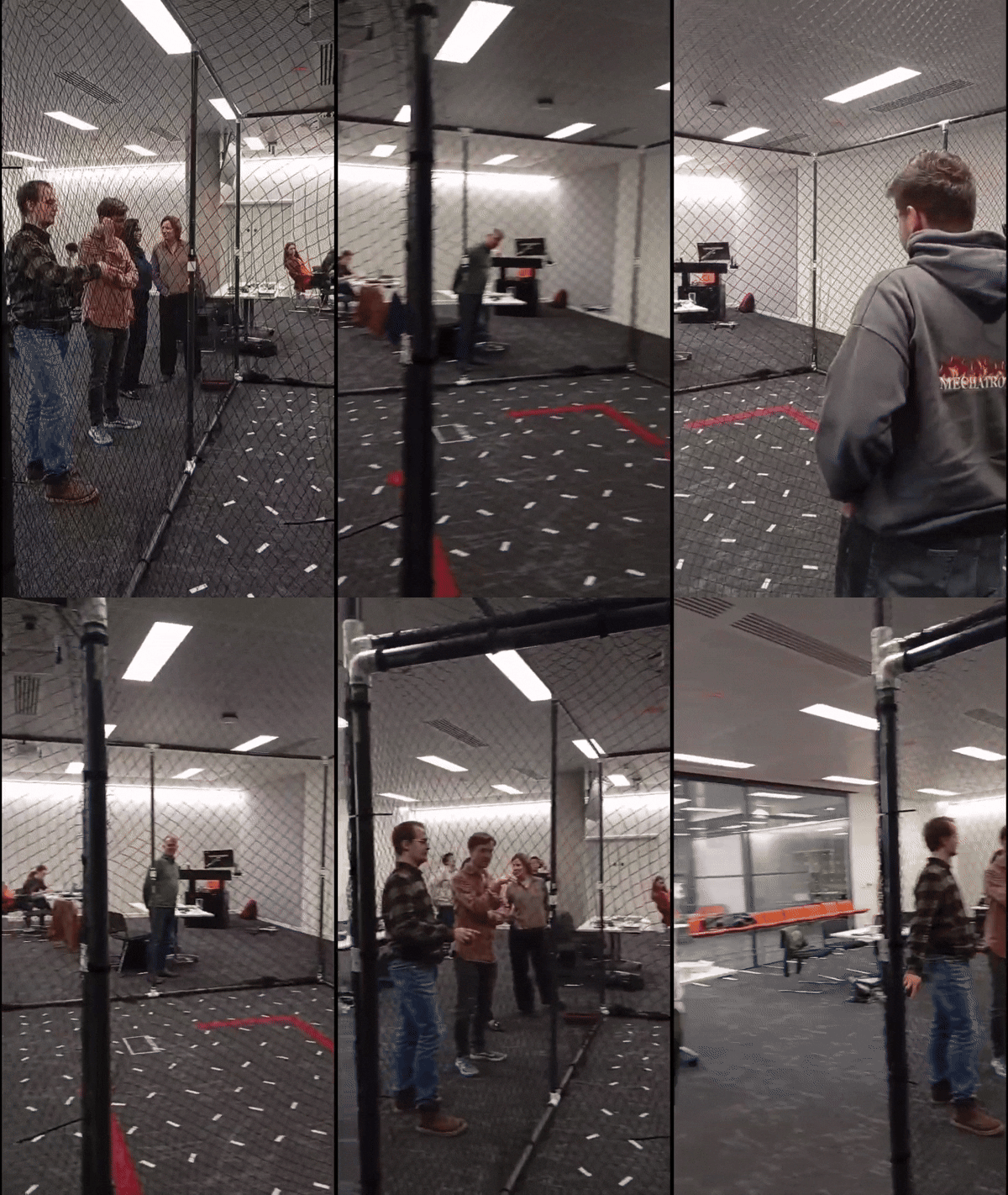
Live hardware flight tests as part of the final deployment round
The Minidrone Competition – Europe 2025 brought together over 40 student teams from across Europe, reflecting the broad academic engagement with model based‑design and autonomous systems. From this group, six finalist teams earned the opportunity to compete in person at the MathWorks Cambridge Office.
For finalist teams, the MathWorks Cambridge Office marked a decisive transition from validated simulation models to autonomous flight on real hardware. In November 2025, students arrived not to demonstrate concepts, but to test whether their designs could withstand the realities of a physical system.
Finalist teams represented a diverse set of institutions, including:
- University of Oxford
- ISAE‑SUPAERO
- Warsaw University of Technology
- A joint team from the Technical University of Denmark and Warsaw University of Technology
The Simulink models developed during the simulation phase were deployed onto Parrot Mambo minidrones, exposing students to constraints such as small embedded processor, physical dynamics and environmental variability. For many participants, this was their first experience collaborating and competing alongside peers from different countries. Working in a shared technical environment highlighted the collaborative nature of modern engineering.
The onsite agenda balanced focused technical work with opportunities for discussion and exchange, reinforcing that effective engineering practice depends not only on individual models, but also on communication, comparison of approaches, and collective problem solving.
What Students Took Away (Beyond Rankings)
While competition results provided a clear benchmark, the primary outcomes for students extended well beyond rankings.
Through the simulation and deployment workflow, participants gained:
- Hands on experience with model‑based design workflows
- Practical exposure to control systems and image processing
- Experience deploying and validating algorithms on real hardware
- Insight into how industry engineers structure, test, and iterate designs for engineered systems.
- Opportunities to build peer connections across institutions and countries.
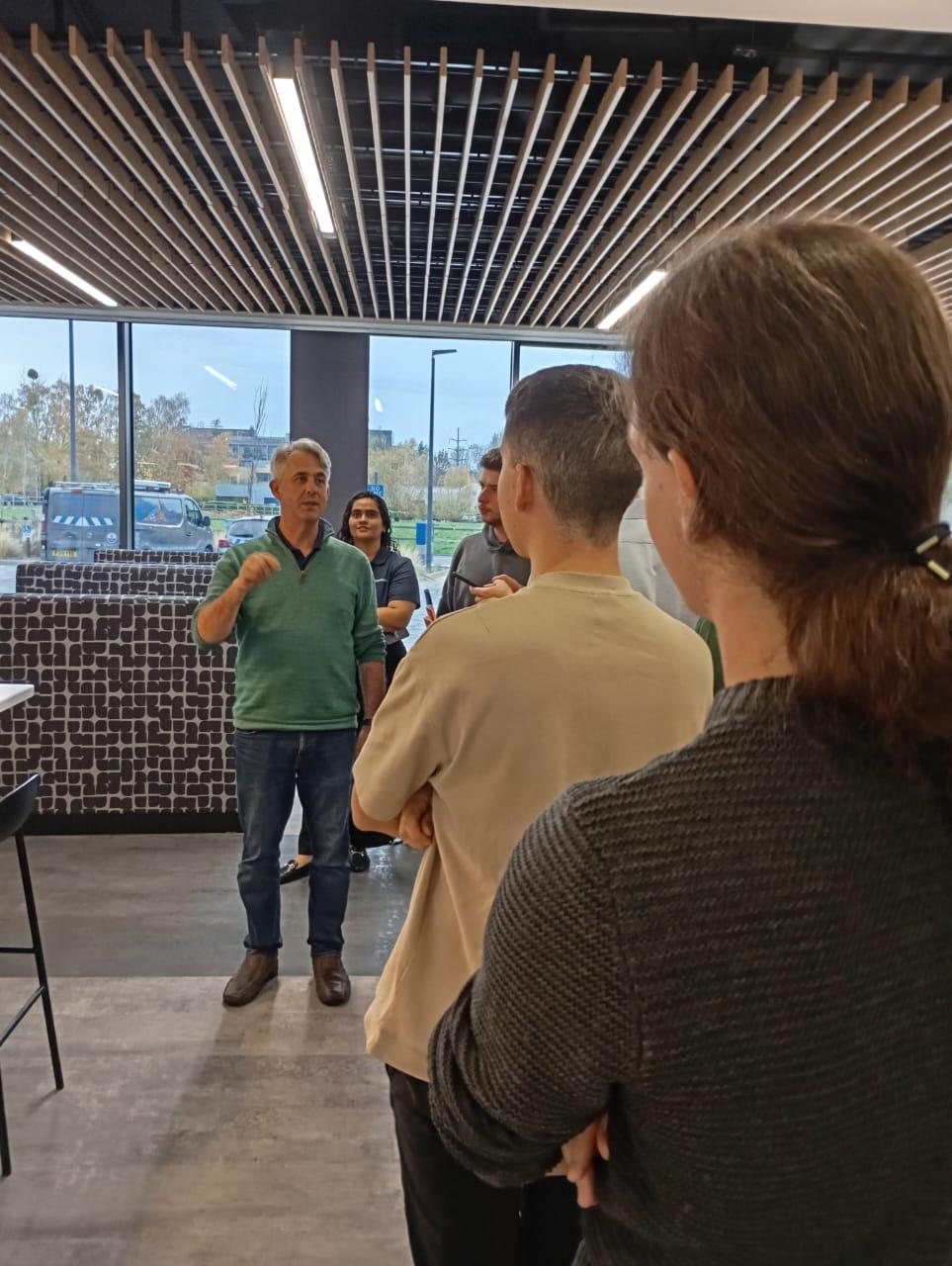
Campus walkthrough and discussion at the MathWorks Cambridge Office
Learning Beyond the Competition: Engineering in Context
As part of the Cambridge finals, finalists also participated in an exclusive technical session on Engineered Systems, delivered by Dr. Gavin Walker from the MathWorks CDA Team. The session provided additional context on how complex engineered systems are approached in professional settings, complementing the Hands-on deployment experience from the competition itself.
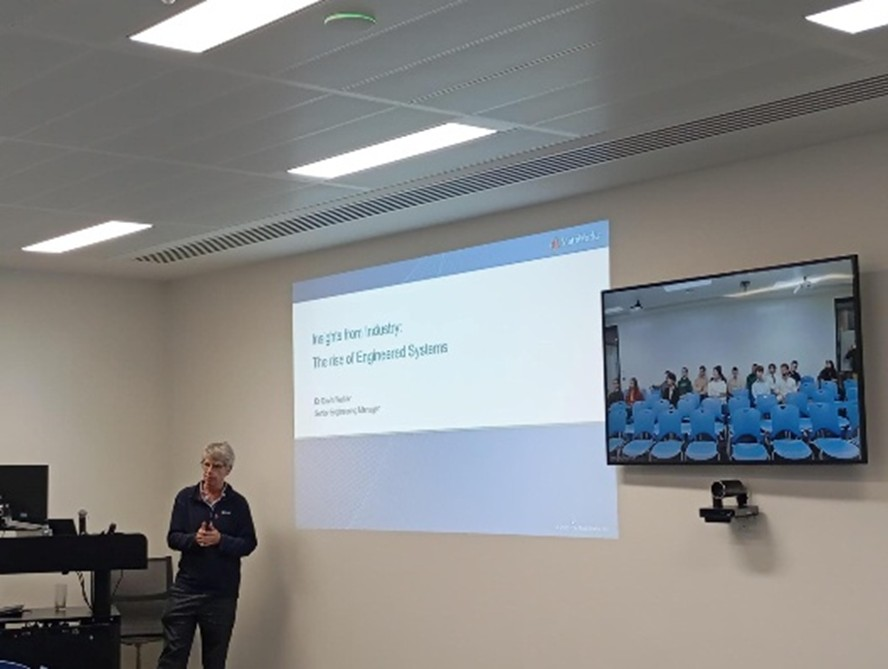
Expert led‑ session on engineered system
Together, the technical challenge, peer interaction, and exposure to industry perspectives offered students a broader view of how academic knowledge translates into engineering practice at scale.
Student Perspectives: The Competition Experience

Student Team from University of Oxford
Hearing directly from participants helps illustrate what the competition workflow meant in practice. Rather than focusing on outcomes or rankings, students consistently reflected on the engineering process itself, particularly the role of Simulation.
“Spending two days at the MathWorks Cambridge Office helped us clearly understand the gap between simulation and deployment. The first day focused on testing and refining our model, followed by live deployment during the competition” – Team Abstract Quadqopter, University of Oxford
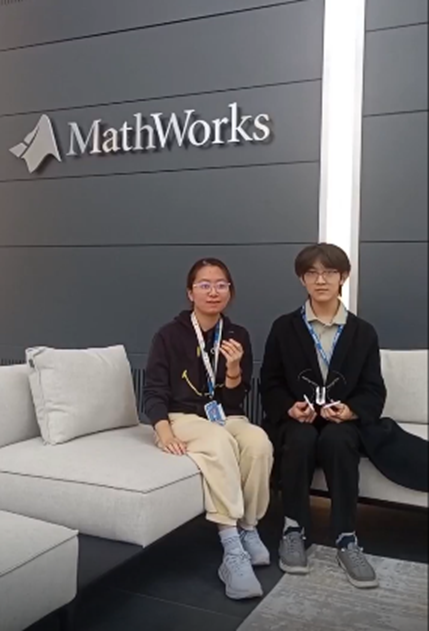
Team Abstract Quadqopter
The Minidrone Competition helped us strengthen our MATLAB and Simulink skills beyond the learnings in coursework, particularly through hands‑on development and deployment. We look forward to the next edition of this event.” – Team KNR PW, Technology University of Denmark & Warsaw University of Technology
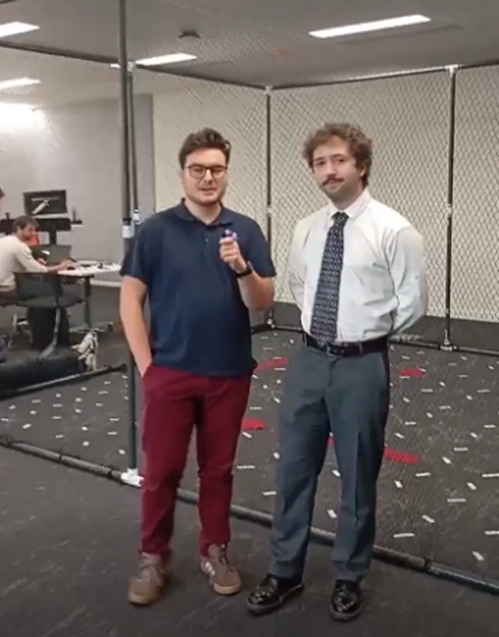
Team KNR PW
These reflections underscore a shared experience across teams: the value of seeing theoretical designs tested, challenged, and improved when exposed to a competitive, collaborative environment.
Why This Matters for Universities and Educators
For universities and educators across the globe, the MathWorks Minidrone Competition provides a structured way to reinforce core engineering concepts through applied learning, without requiring changes to existing curricula.
The competition aligns naturally with courses in perception, guidance, navigation, and control, as well as embedded applications in UAVs and robotics, enabling students to apply theoretical knowledge to real world applications through a model based design workflow.
The Europe 2025 edition further demonstrated how such programs can encourage collaboration across institutions, exposing students to peer learning. As a result, the Minidrone Competition acts as a practical extension of academic learning, strengthening the connection between theory, tools, and real world‑ implementation.
Looking Ahead
The Europe 2025 edition demonstrated how structured, simulation first challenges can extend classroom learning into real engineering practice. As future editions evolve, the Minidrone Competition will continue to provide students and educators with opportunities to connect theory, tools, and deployment in a meaningful and applied context.
If you are interested in participating, explore upcoming MathWorks Minidrone Competitions near you.
If you would like to host the MathWorks Minidrone Competition on your campus, club, or as part of a course, please reach out to us at minidronecompetition@mathworks.com.
- Category:
- MATLAB,
- Robotics,
- Simulink,
- Team achievements


Comments
To leave a comment, please click here to sign in to your MathWorks Account or create a new one.