
MATLAB in Physics
Jiro's pick this week is MATLAB in Physics Lecture by Matt McDonnell.
As an application engineer, I travel to many universities to give seminars on MathWorks products. This week, I had a chance to visit Virginia Commonwealth University and talk in front of 50 to 70 engineering freshman students taking the "Engineering Visualization and Computation" course. The course introduces students to several engineering tools including MATLAB. For the session, I showed a few application examples that involve MATLAB, like probablility/statistics, image processing, and audio processing. MATLAB is a powerful tool for doing advanced analysis and research, but it can also be a useful tool to teach various concepts.
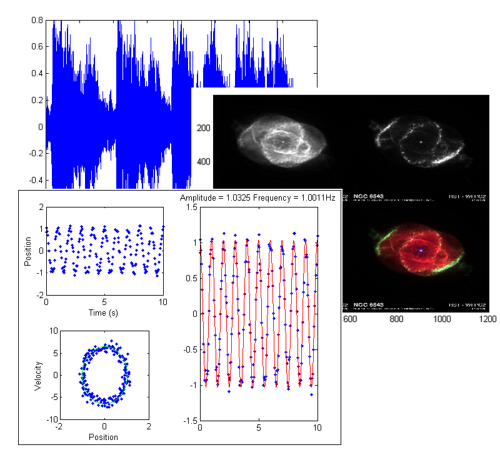
This set of lecture files by Matt is designed to teach fundamental physics concepts using MATLAB to undergraduate students. It's nicely designed, starting off with MATLAB basics, and then using some of the analysis and visualization capabilities to explore sounds, images, and physical systems. There's a MATLAB script which you can publish, and he includes a PDF version of the lecture as well.
Comments
You can find other teaching materials from the Link Exchange Academic Curricula category. Loren has also blogged about teaching. If you are using MATLAB for teaching, tell us about it here.
- Category:
- Picks




Comments
To leave a comment, please click here to sign in to your MathWorks Account or create a new one.