
Solving Mazes with Image Processing Algorithms
Brett's Pick this week is maze_solution, by Image Analyst.
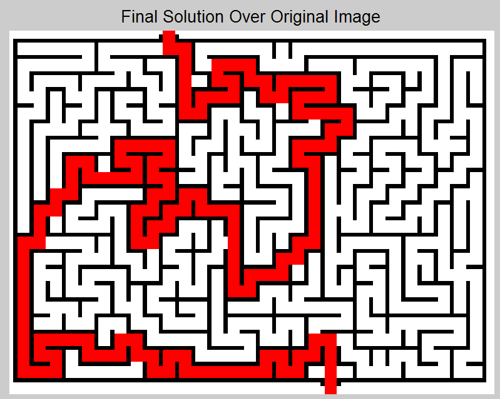
Last week, Loren blogged about Image Analyst's new File Exchange submission for solving mazes using image processing algorithms. So why am I following suit by selecting it as a Pick of the Week? Several reasons. One, because I agree with Loren that "the maze solver here uses image processing concepts such as morphological operations...[in a] fun way...[that] reinforce[s] the application of these image processing concepts." In other words, Image Analyst's approach was interesting and informational. I've been solving the occasional maze since I was a child (a very long time ago), and I've been solving image processing problems for more than 15 years, but it never occurred to me to use morphological operators to find a solution. In retrospect, the approach makes perfect sense: process the image, and use blob analysis to find connected components, and select the one that completes the puzzle. Very clever!
Second: because I wanted to tag the entry with a "Pick of the Week" emblem, for whatever that's worth. :)
And finally, because I recognize that not all readers of the Pick of the Week blog read "Loren on the Art of MATLAB." (But they should!)

- Category:
- Picks




Comments
To leave a comment, please click here to sign in to your MathWorks Account or create a new one.