
Sedona Arizona is a perfect site for the first MathWorks excursion into lifestyle products.... read more >>

Sedona Arizona is a perfect site for the first MathWorks excursion into lifestyle products.... read more >>

My MATLAB® program, amaze, generates mazes by combining old friends, numgrid and delsq, with a new friend, the graph object. Let's see how we make this example maze.... read more >>

For the past month I have been working with the variable format 16-bit floating point arithmetic that I described in this post. It has been frustrating work. I have found that the limited precision and limited range of half precision make it barely usable for the kind of experiments with matrix computation that I like to do. In this post I will describe a few of these experiments.... read more >>

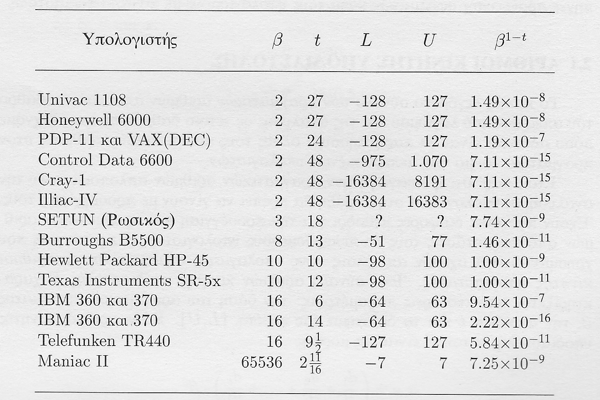
In a comment following my post about half-precision arithmetic, "Raj C" asked how the parameters for IEEE Standard 754 floating point arithmetic were chosen. I replied that I didn't know but would try to find out. I called emeritus U. C. Berkeley Professor W. (Velvel) Kahan, who was the principle architect of 754. Here is what I learned.... read more >>
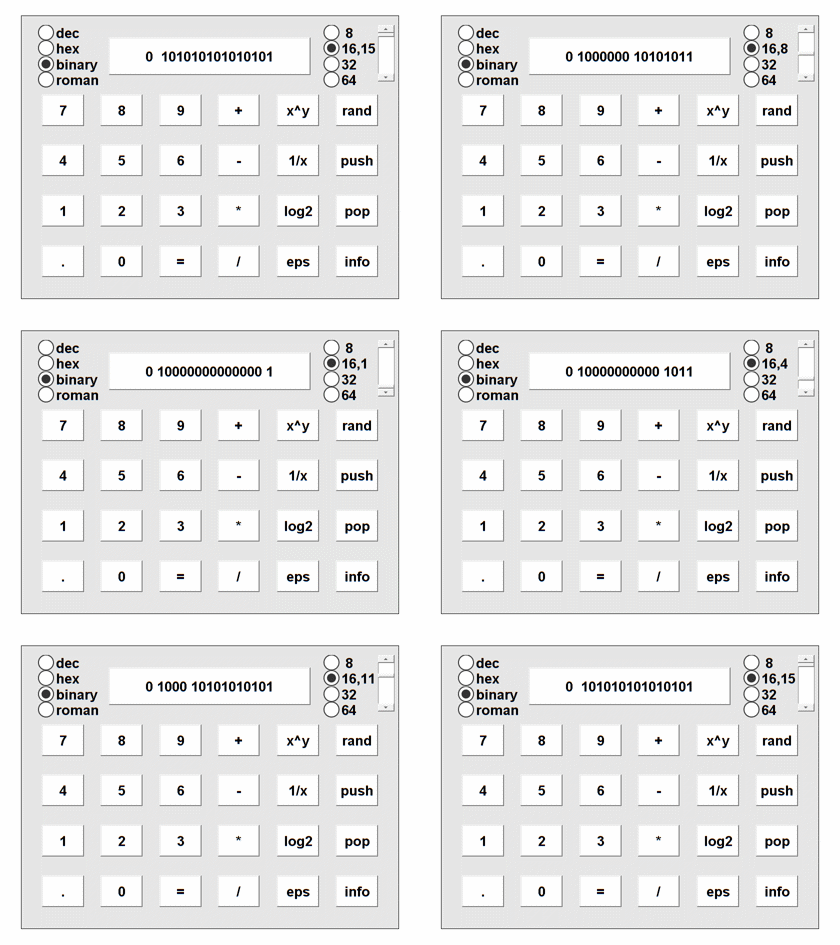
A year and a half ago I wrote a post about "half precision" 16-bit floating point arithmetic, Moler on fp16. I followed this with a bug fix, bug in fp16. Both posts were about fp16, defined in IEEE standard 754. This is only one of 15 possible 16-bit formats. In this post I am going to consider all 15.... read more >>
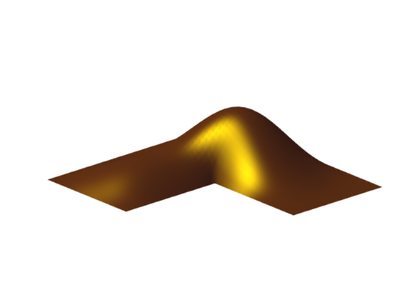
VAXBARN Restores Vibrating Membrane on Ardent Titan dore_frame This is a short post to point to a web site in the Netherlands, VAXBARN. The site proprietor, Camiel Vanderhoeven, is assembling a... read more >>
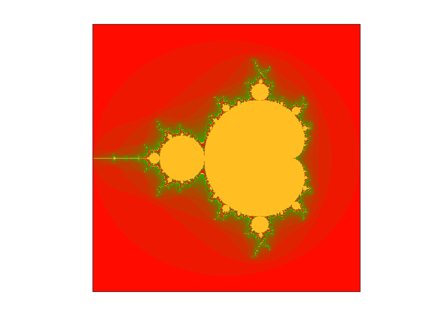
Mandelbrot Brings Season's GreetingsMandelbrot sports a new red, green and gold colormap to celebrate the holidays. old_mandelbrot holiday_mandelbrot Available in Version 4.10 of Cleve's... read more >>
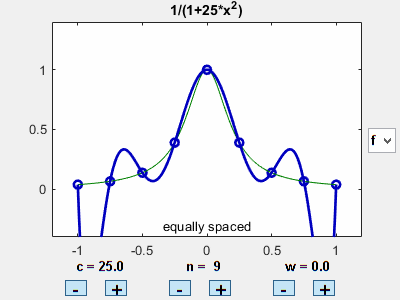
As the degree of an interpolating polynomial increases, does the polynomial converge to the underlying function? The short answer is maybe. I want to describe a visual tool to help you investigate this question yourself.... read more >>

MathWorks is creating a deck of playing cards that will be offered as gifts at our trade show booths. The design of the cards is based on Penrose Tilings and plots of the Finite Fourier Transform Matrix.... read more >>
These postings are the author's and don't necessarily represent the opinions of MathWorks.